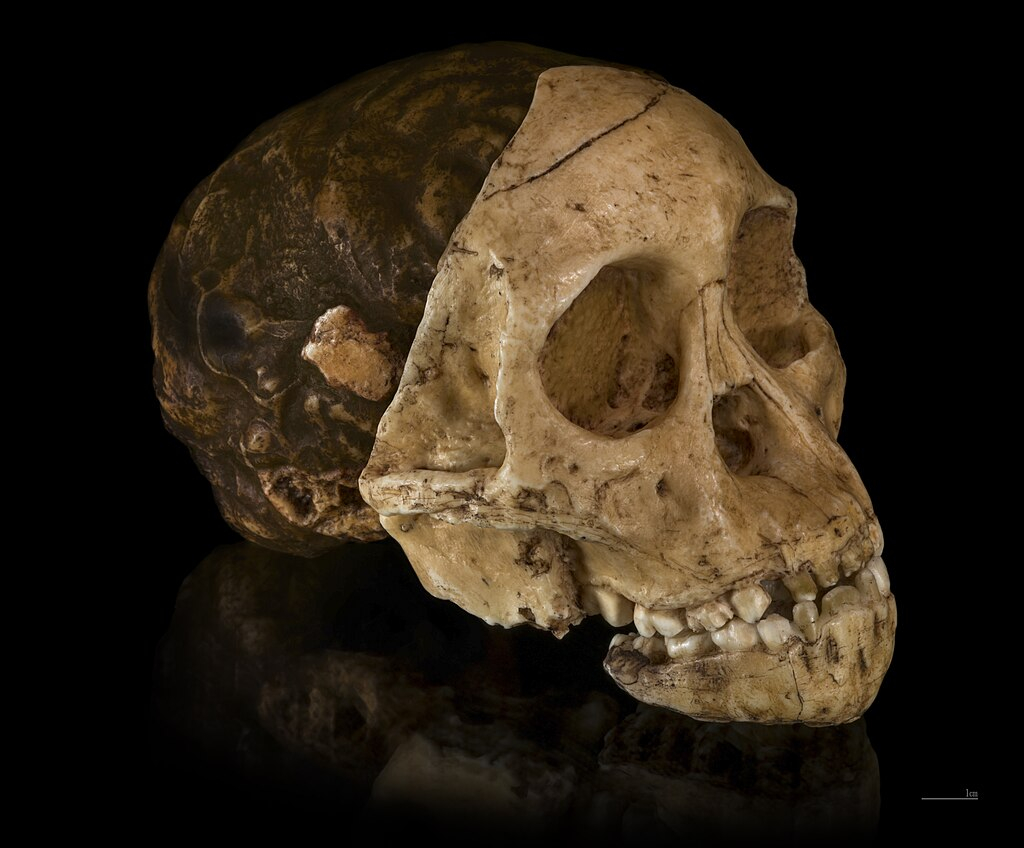
Discovery of the “Taung child”
Science
Human Evolution
4 min read
Updated By: History Editorial Network (HEN)
Published:
In Taung, South Africa, a significant discovery was made by miner M. de Bruin in a lime quarry. He uncovered an infant fossil skull, now known as the “Taung child”. The skull was fragile and tiny, indicating a child about three years old. This fossil turned out to be one of the most important discoveries in the field of paleoanthropology.
The “Taung child” fossil belonged to a species later named Australopithecus africanus. This discovery provided crucial evidence supporting the theory of human evolution in Africa. The skull showed a combination of human-like and ape-like features, challenging previously held beliefs about human origins.
Upon closer examination by paleontologist Raymond Dart, it was revealed that the fossil had a small braincase and large brow ridges, resembling characteristics of both apes and humans. This finding revolutionized the understanding of human evolution, suggesting that our ancestors originated in Africa instead of Europe or Asia.
The discovery of the “Taung child” had a lasting impact on the scientific community, leading to further research and discoveries in the field of paleoanthropology. It provided valuable insights into the early stages of human evolution and reshaped the way researchers viewed human ancestors.
Today, the “Taung child” fossil remains a significant piece of evidence in the study of human evolution. It serves as a reminder of the rich history of early humans in Africa and the groundbreaking discoveries that continue to shape our understanding of our origins.
#TaungChild #FossilDiscovery #HumanEvolution #Paleoanthropology

Explore the Life Moments of
 AI Twin