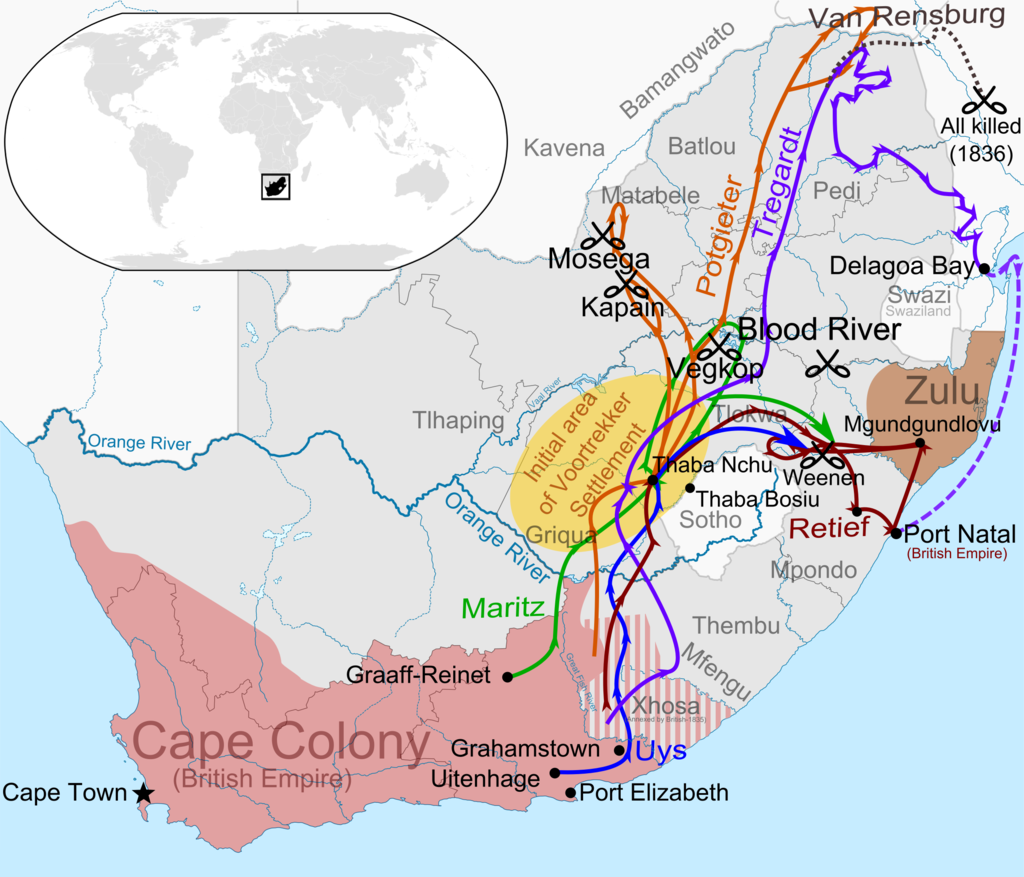
Boer Settlers' Inland Migration and Conflict with Indigenous Groups

Political.
3 min read
Updated By: History Editorial Network (HEN)
Published:
In the 1830s, Boer settlers in South Africa embarked on The Great Trek, a mass migration inland. This movement was a response to discontent with British colonial rule and a desire for independence. The Boers sought to escape British control and find new lands where they could establish their own communities.
As the Boer settlers trekked inland, they came into conflict with various indigenous groups, including the Xhosa and Zulu tribes. These clashes were often violent, as both sides fought for control of land and resources. The Boers' superior weaponry and tactics gave them an advantage in many of these conflicts, leading to the displacement and subjugation of indigenous peoples.
The Great Trek marked a significant turning point in South African history, as it laid the foundation for the establishment of Boer republics such as the South African Republic and the Orange Free State. These republics would later play a crucial role in shaping the political landscape of the region.
Overall, The Great Trek was a complex and tumultuous event that had lasting consequences for South Africa. It highlighted the tensions between European settlers and indigenous peoples, as well as the struggle for power and control in the region. The legacy of The Great Trek continues to resonate in modern South Africa, as the country grapples with issues of land ownership, identity, and reconciliation.
#GreatTrek #BoerSettlers #IndigenousConflicts #SouthAfricanHistory

Explore the Life Moments of
 AI Twin