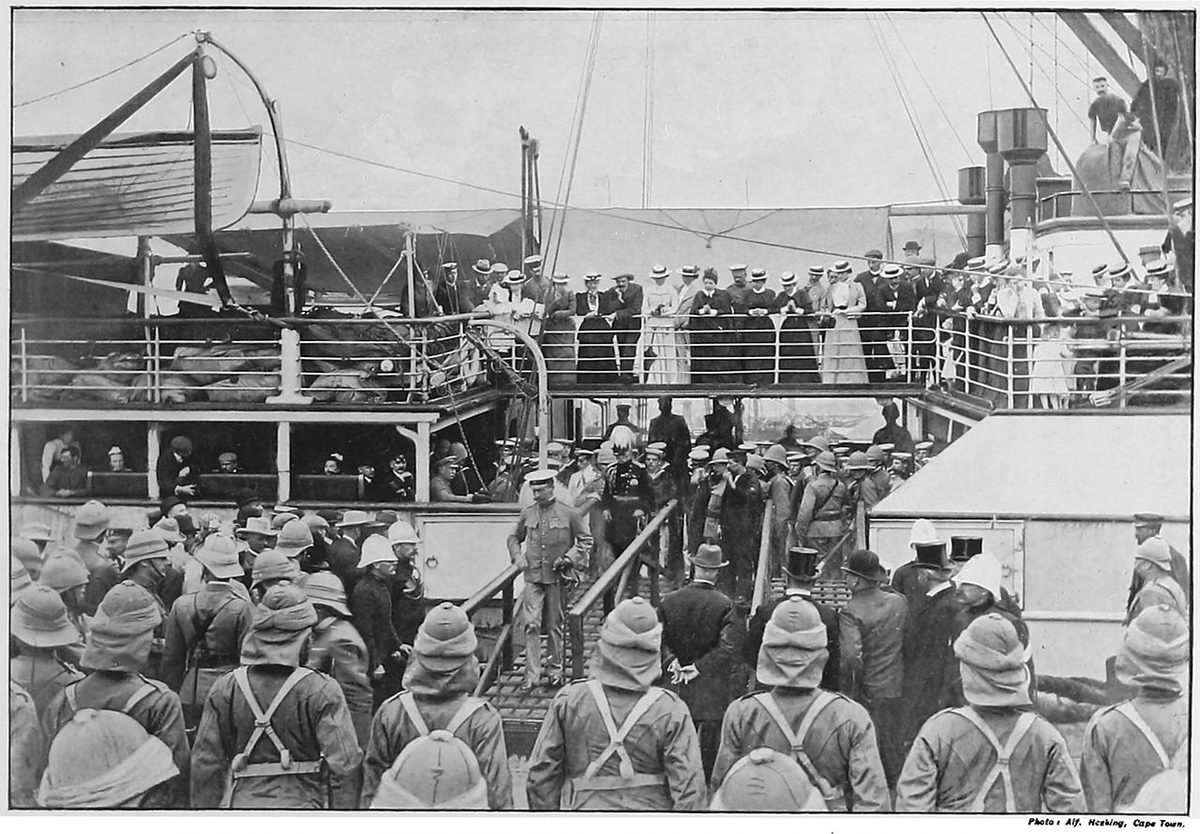
Conflict: Second Boer War, significant loss of life with British Empire and Boer republics.

Political
4 min read
Updated By: History Editorial Network (HEN)
Published:
The South African War, also known as the Second Boer War, erupted between the British Empire and the Boer republics of Transvaal and Orange Free State. The conflict was rooted in tensions over British colonial expansion and Boer desire for independence. The discovery of gold and diamonds in Boer territory further fueled the tensions.
The British Empire, seeking to consolidate its power in the region, declared war on the Boer republics. What followed was a brutal and protracted conflict marked by guerrilla warfare, sieges, and scorched earth tactics. The Boers, highly skilled marksmen, inflicted heavy casualties on the British forces through hit-and-run tactics.
The war took a heavy toll on both sides, with significant loss of life among soldiers and civilians. The British implemented a scorched earth policy, destroying Boer farms and confining civilians in concentration camps where disease and malnutrition ran rampant. The Boers, in turn, engaged in a scorched earth strategy of their own, leading to widespread destruction and suffering.
After several years of fighting, the British ultimately emerged victorious, and the Boer republics were annexed into the British Empire. The war had far-reaching consequences, reshaping the political and social landscape of South Africa. The harsh treatment of Boer civilians in concentration camps left a deep scar on the collective memory of Afrikaners and fueled resentment towards British rule.
The South African War highlighted the complexities of imperialism, nationalism, and racial tensions in the region. It paved the way for the eventual establishment of the Union of South Africa in 1910, marking the beginning of a new chapter in the country's history.
#SouthAfricanWar #SecondBoerWar #BritishEmpire #BoerRepublics #Imperialism #Nationalism #RacialTensions

Explore the Life Moments of
 AI Twin