British Annexation of Orange Free State
Political
4 min read
Updated By: History Editorial Network (HEN)
Published:
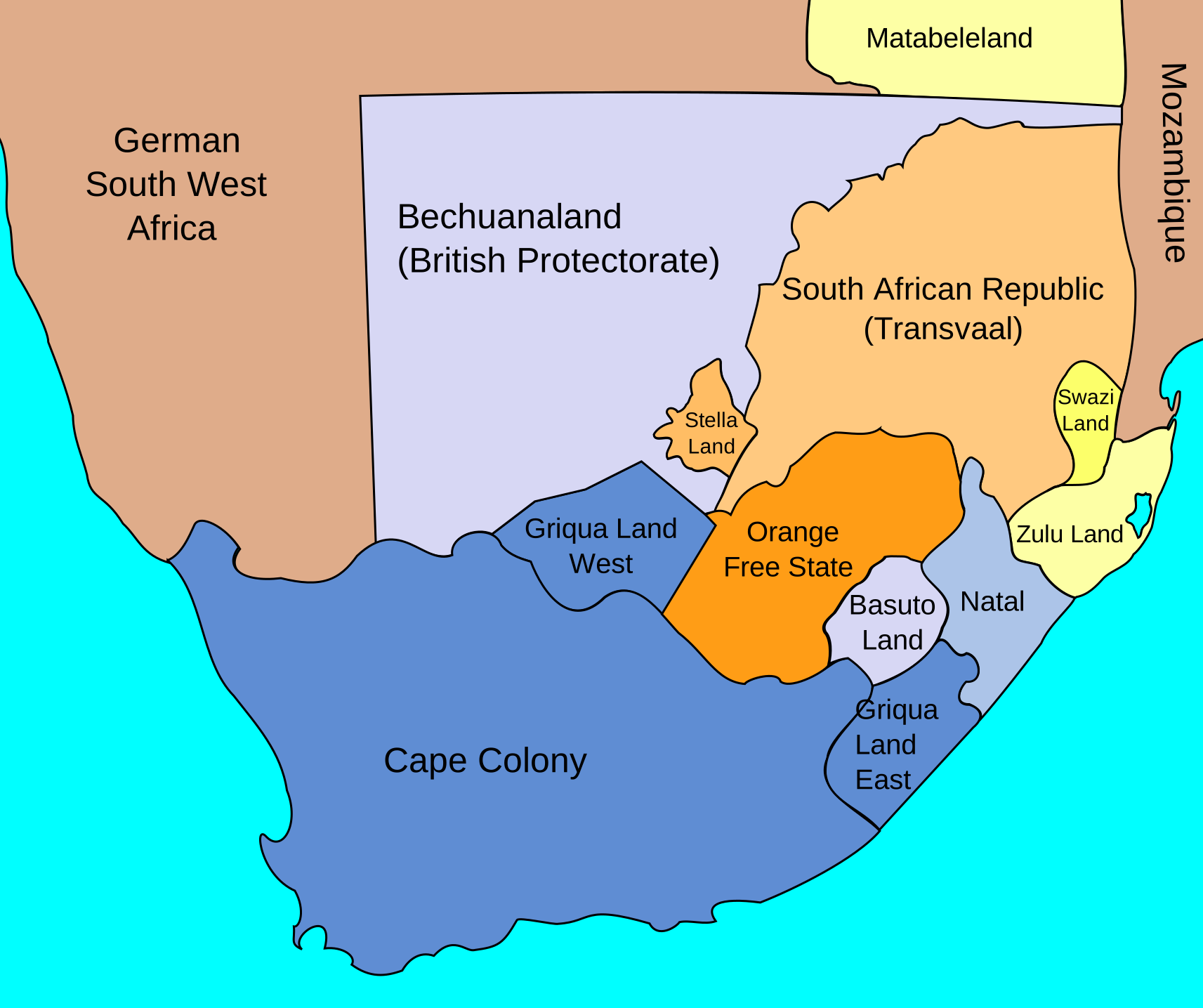
In the early 1900s, the British annexation of the Orange Free State marked a pivotal moment in South Africa's history. The Boer republic's refusal to align with the British empire led to escalating tensions, culminating in a military conflict. British forces, determined to consolidate power in the region, launched a campaign to assert their dominance.
The annexation had far-reaching consequences for the Orange Free State and its inhabitants. The imposition of British rule brought about significant changes to the region's governance, economy, and social fabric. The Boer population faced challenges as their way of life was altered under British control.
British annexation also had broader implications for South Africa as a whole. The consolidation of British authority in the Orange Free State contributed to the eventual formation of the Union of South Africa in 1910. The annexation served as a catalyst for greater British influence and control over the entire region.
The aftermath of the annexation saw a period of transition and adaptation for the Orange Free State. The Boer population navigated a new political landscape under British rule, with implications for land rights, cultural practices, and social dynamics. The integration of the region into the broader British colonial framework reshaped the dynamics of power in South Africa.
Overall, the British annexation of the Orange Free State represented a turning point in the history of South Africa. The event not only altered the political and social landscape of the region but also set the stage for broader shifts in colonial power dynamics. The legacy of this annexation continues to resonate in the historical narrative of South Africa, shaping its path towards independence and self-governance.
#BritishAnnexation #OrangeFreeState #SouthAfricanHistory #Colonialism

Explore the Life Moments of
 AI Twin