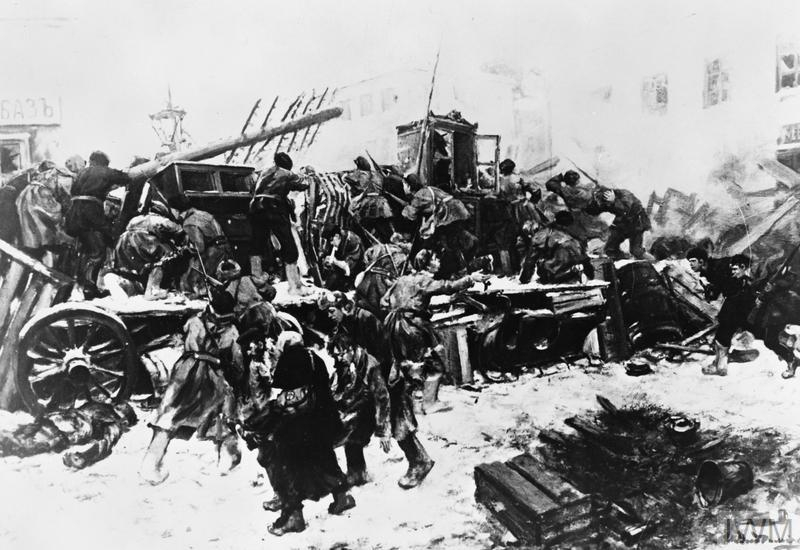
1905 Russian Revolution
Russia
3 min read
Updated By: History Editorial Network (HEN)
Published:
The 1905 Russian Revolution marked a pivotal turning point in the history of Imperial Russia, serving as a prelude to the more seismic revolutions of 1917. Sparked by widespread discontent with the autocratic rule of Tsar Nicholas II, this revolution was fueled by poor working conditions, a lack of political freedom, and the recent military defeat in the Russo-Japanese War. The immediate catalyst was the massacre on "Bloody Sunday," when peaceful protestors, led by Father Gapon, were gunned down by the Tsar’s troops in St. Petersburg. This brutal suppression ignited a wave of strikes, peasant uprisings, and military mutinies across the empire.
Although the revolution did not overthrow the monarchy, it forced Tsar Nicholas II to make significant concessions, including the creation of the State Duma, a national parliament. The October Manifesto promised civil liberties and a more representative government, but many of these reforms were later diluted or reversed. Nevertheless, the 1905 Revolution exposed the deep-rooted social and political issues in Russia, laying the foundation for the revolutions that would ultimately bring an end to Tsarist rule. It remains a crucial chapter in understanding the struggle for rights and justice in early 20th-century Russia.
\#1905Revolution #RussianHistory #TsarNicholasII #BloodySunday #RevolutionarySpirit #MomentsOfLife #MoofLife\_Moment #MoofLife

Explore the Life Moments of
 AI Twin