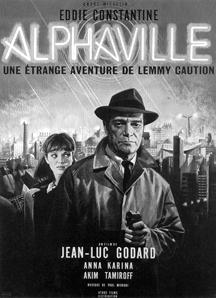
Alphaville
Film
Cinema
French New Wave
4 min read
Updated By: History Editorial Network (HEN)
Published:
Updated:
Jean-Luc Godard's film Alphaville is a notable example of French New Wave cinema, which emerged as a revolutionary movement in the late 1950s and 1960s. This film presents a dystopian vision of a future Paris, where an artificial intelligence named Alpha 60 governs the city and has prohibited all forms of emotion and individuality. The narrative follows a secret agent, Lemmy Caution, who is sent to Alphaville to locate a missing person and confront the oppressive regime. Godard's work is characterized by its innovative storytelling techniques, including non-linear narratives, jump cuts, and a blend of genres, which challenged traditional cinematic conventions. The film's exploration of themes such as technology, control, and the human condition reflects the anxieties of the era, particularly in relation to the rapid advancements in technology and the potential consequences of dehumanization in a mechanized society.
The impact of Alphaville extends beyond its immediate reception; it has influenced numerous filmmakers and remains a critical reference point in discussions about science fiction and the role of technology in society. The film's aesthetic choices, such as the use of stark black-and-white cinematography and urban landscapes, have inspired a range of visual styles in subsequent works. Additionally, the portrayal of an emotionless society resonates with contemporary concerns about artificial intelligence and its implications for human relationships. As part of the New Wave movement, Godard's Alphaville not only contributed to the evolution of film as an art form but also provoked thought about the future of humanity in an increasingly technological world.
#mooflife
#MomentOfLife
#Godard
#Alphaville
#NewWaveCinema
#FrenchCinema
#ScienceFiction

Explore the Life Moments of
 AI Twin