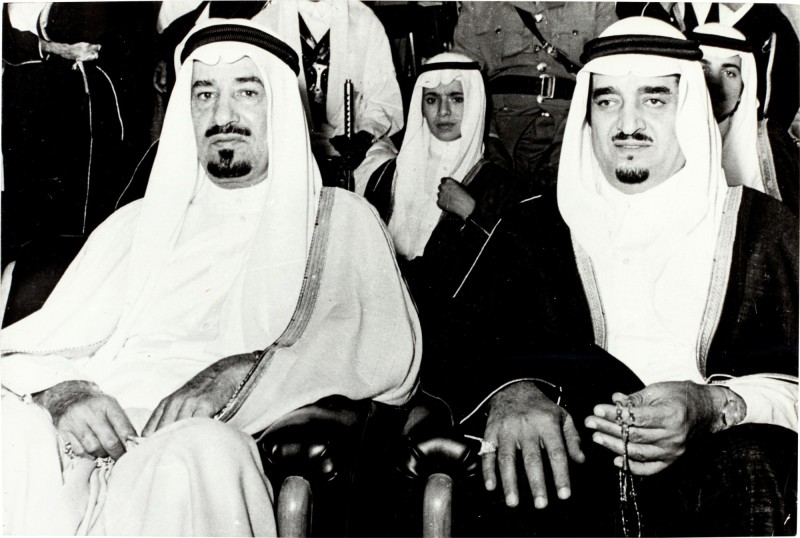
King Fahd adds the title "Custodian of the Two Holy Mosques" to his name.
Saudi Arabia
7 min read
Updated By: History Editorial Network (HEN)
Published:
In 1986, King Fahd of Saudi Arabia officially adopted the title "Custodian of the Two Holy Mosques" (خادم الحرمين الشريفين), marking a significant moment in the modern history of Saudi Arabia and the Islamic world. This title reflects the King's role in overseeing the holy cities of Mecca and Medina, which house Islam's most sacred sites, the Masjid al-Haram (the Grand Mosque) and the Masjid an-Nabawi (the Prophet's Mosque).
Historical and Religious Significance
The title "Custodian of the Two Holy Mosques" carries deep historical and religious significance. It underscores the responsibility of the Saudi monarch to protect and maintain the two holiest sites in Islam. Mecca is the birthplace of the Prophet Muhammad and the location of the Kaaba, the qibla (direction of prayer) for Muslims around the world. Medina is the site of the Prophet's Mosque and his final resting place. Together, these cities form the spiritual heart of the Islamic faith.
King Fahd's Reign
King Fahd bin Abdulaziz Al Saud became the King of Saudi Arabia in 1982, succeeding his half-brother King Khalid. His reign was marked by significant economic and infrastructural development, bolstered by the country's vast oil wealth. However, his assumption of the title "Custodian of the Two Holy Mosques" in 1986 was one of the most symbolic acts of his kingship.
Motivations for Adopting the Title
The adoption of this title can be seen as a move to reinforce the legitimacy and religious authority of the Saudi monarchy. By emphasizing their role as guardians of Islam's holiest sites, the Saudi rulers underscore their unique position within the Muslim world. This title also reflects a commitment to ensuring the safety, security, and accessibility of these sites for pilgrims.
Enhancements and Developments
King Fahd's reign saw extensive renovations and expansions of both the Grand Mosque in Mecca and the Prophet's Mosque in Medina. These projects aimed to accommodate the increasing number of pilgrims participating in the Hajj and Umrah pilgrimages, which are central to Islamic practice. The enhancements included enlarging the prayer areas, improving infrastructure, and incorporating modern facilities to manage the massive influx of visitors each year.
Broader Implications
The adoption of the title "Custodian of the Two Holy Mosques" had broader implications for Saudi Arabia's international and domestic policies. It enhanced the Kingdom's standing within the Islamic world, reinforcing its role as a leader and a protector of Islamic heritage. This move also aligned with Saudi Arabia's efforts to project itself as a stable and pious nation, committed to the well-being of the global Muslim community.
Legacy
King Fahd's adoption of the title remains a defining aspect of his legacy. It has been continued by his successors, including the current king, Salman bin Abdulaziz Al Saud, who also carries the title. The ongoing commitment to the preservation and enhancement of the holy sites in Mecca and Medina continues to be a central element of the Saudi monarchy's identity and its relationship with the Muslim world.
#MomentsOfLife #MoofLife_Moment #MoofLife #CustodianOfTheTwoHolyMosques #KingFahd #SaudiArabia #IslamicHeritage #Mecca #Medina

Explore the Life Moments of
 AI Twin