Russia joins Partnership for Peace
Brussels, Belgium
International Relations
Military Alliances
Peacekeeping Initiatives
4 min read
Updated By: History Editorial Network (HEN)
Published:
Updated:
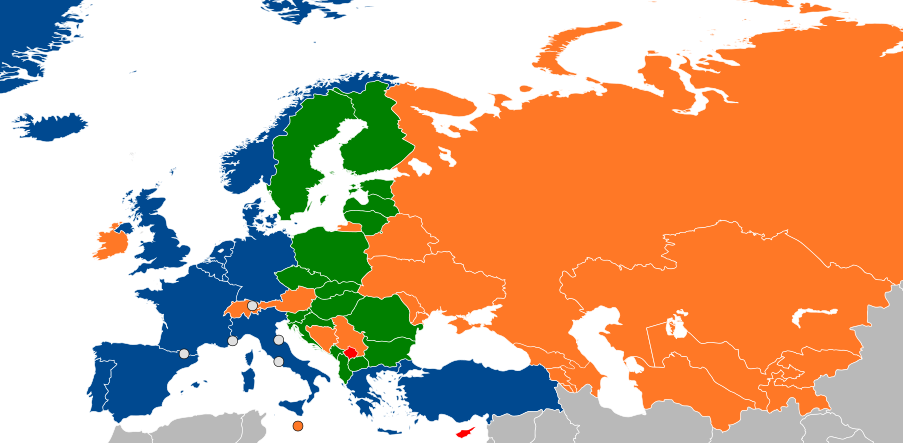
The Partnership for Peace (PfP) program was established to enhance cooperation between NATO and non-NATO countries, aiming to promote stability and security in Europe. Russia's decision to join the PfP marked a pivotal shift in its post-Cold War foreign policy, reflecting a desire to engage more closely with Western nations. This initiative was part of a broader strategy to foster dialogue and collaboration on security issues, particularly in the context of the changing geopolitical landscape following the dissolution of the Soviet Union. By joining the PfP, Russia sought to demonstrate its commitment to peace and security in Europe, while also gaining access to NATO's resources and expertise in defense matters.
The impact of Russia's participation in the Partnership for Peace was significant in terms of military cooperation and political dialogue. It allowed for joint exercises, training programs, and the sharing of best practices among member states. This collaboration aimed to build trust and reduce tensions between NATO and Russia, which had been historically adversarial. Statistics indicate that the PfP has involved numerous joint military exercises and initiatives, contributing to a more integrated approach to security in Europe. However, the relationship has been complex, with periods of cooperation often followed by tensions, particularly in light of subsequent geopolitical events. Overall, Russia's involvement in the Partnership for Peace represents a critical moment in its efforts to redefine its role in European security architecture and engage with Western powers.
#mooflife
#MomentOfLife
#Russia
#PartnershipForPeace
#Nato
#EuropeanSecurity
#MilitaryCooperation
Primary Reference
Russia Joins NATO ‘Peace Partnership’

Explore the Life Moments of
 AI Twin