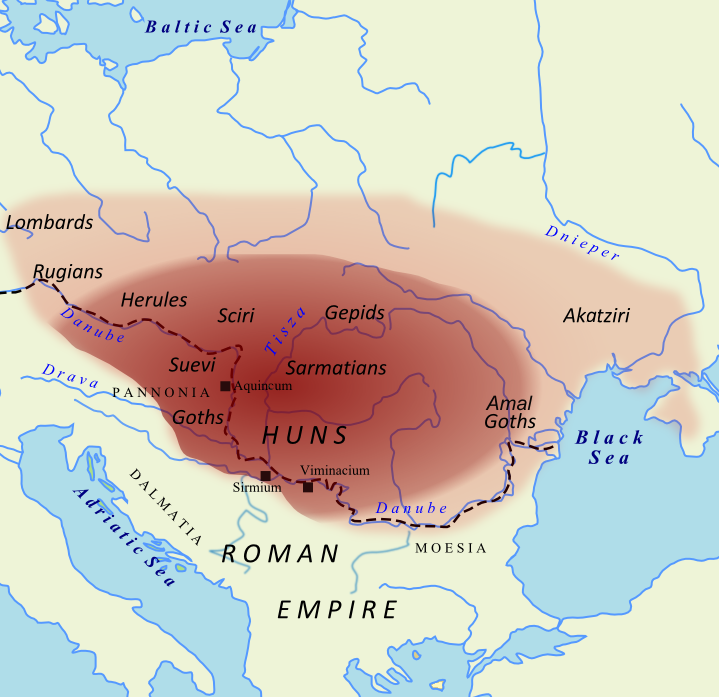
The Huns invade modern-day Romanian territory
Romania

War
4 min read
Updated By: History Editorial Network (HEN)
Published:
In the year 376, the Huns, a fierce nomadic tribe from Central Asia, invaded the territory of modern-day Romania. The Huns, under the leadership of their famed leader Attila, were known for their exceptional military skills and ruthless tactics.
The invasion of the Huns into Romania had a profound impact on the region. The once peaceful and prosperous lands of Romania were now plunged into chaos and uncertainty. Villages were pillaged, cities were besieged, and many people were forced to flee their homes to escape the brutality of the Hunnic warriors. The Roman authorities in the region were caught off guard and struggled to contain the marauding invaders.
The Huns were relentless in their conquest, pushing further into Romanian territory with each passing day. Their swift and overwhelming attacks struck fear into the hearts of the Romanian people, who had never faced such a formidable foe before. The Huns established their dominance over the region, establishing a new order driven by fear and subjugation.
The invasion of the Huns marked a turning point in the history of Romania. The once thriving province of the Roman Empire was now under the control of a foreign and hostile power. The cultural and social fabric of the region was forever altered by the presence of the Huns, who left a lasting legacy of destruction and despair in their wake.
Today, the invasion of the Huns remains a somber reminder of the brutal realities of war and conquest. It serves as a cautionary tale of the devastating impact that external forces can have on a nation's sovereignty and stability. The scars of the invasion can still be seen in the historical and cultural landscape of modern-day Romania, a testament to the resilience and strength of its people. #HunsInvasion #RomaniaHistory #AttilaTheHun
Primary Reference
Golden Horde - Wikipedia

Explore the Life Moments of
 AI Twin