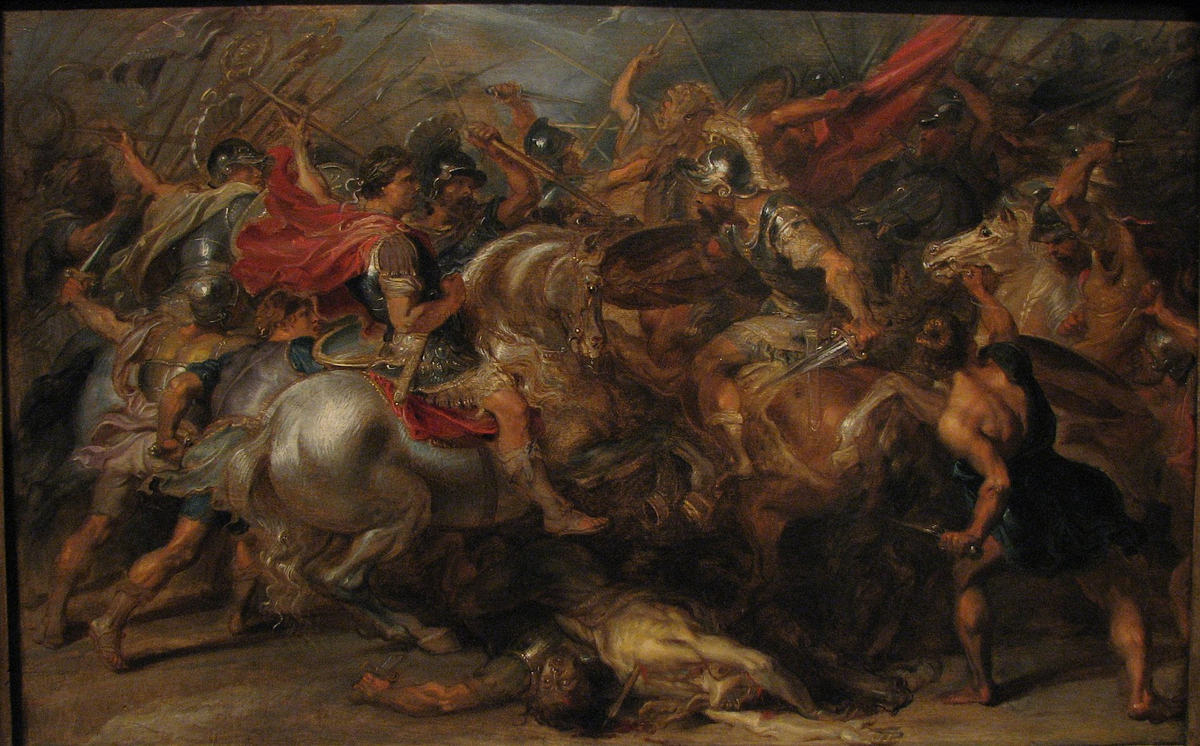
Defeat and Execution of Licinius
Italy
Roman History
Political Power Struggles
Imperial Leadership
6 min read
Updated By: History Editorial Network (HEN)
Published:
Updated:
The defeat and execution of Emperor Licinius between 324 and 325 AD brought an end to the Roman Tetrarchic system and established Constantine the Great as the sole ruler of the Roman Empire. After a decade of uneasy coexistence following earlier settlements, relations between the two emperors deteriorated into open conflict in 324. The struggle was both political and ideological, with Constantine aligning himself publicly with Christianity, while Licinius was portrayed by his rivals as opposing Christian interests, though this characterization remains debated in historical sources.
The campaign began decisively with the Battle of Adrianople on 03/07/324 in Thrace, where Constantine’s forces defeated Licinius and forced his retreat toward Byzantium. Control of the Bosphorus and surrounding waterways became central to the campaign. Constantine’s son, Crispus, led the imperial fleet in the Battle of the Hellespont, achieving a naval victory that destroyed much of Licinius’s fleet and disrupted his supply routes. This success allowed Constantine to transport his army across the straits and press the conflict into Asia Minor.
The final confrontation occurred at the Battle of Chrysopolis on 18/09/324, near present-day Üsküdar. Constantine’s army secured a decisive victory over Licinius’s remaining forces. Following the defeat, Licinius withdrew to Nicomedia with an estimated 30,000 troops but soon surrendered after recognizing the collapse of his position. His surrender was reportedly influenced by negotiations involving Constantia, Constantine’s half-sister and Licinius’s wife, who sought clemency on his behalf.
Initially, Constantine spared Licinius and placed him under supervision. However, in 325 AD, Licinius was executed, reportedly on suspicion of attempting to organize further resistance. His son, Licinius II, was also later executed. These actions removed the final rival claimant to imperial authority and formally ended the Tetrarchic system established by Emperor Diocletian in 293 AD.
With no remaining co-emperors, Constantine ruled a unified Roman Empire, overseeing both eastern and western regions. This consolidation enabled him to advance administrative reforms and religious policies without internal opposition. In the years following these events, he initiated major projects, including the foundation of Constantinople, which would become a central seat of imperial governance.
#ConstantineTheGreat #Licinius #RomanEmpire #AncientHistory #Tetrarchy
#mooflife
#MomentOfLife
#Licinius
#Constantine
#RomanEmpire
#Co-emperors
#PoliticalConsolidation
Primary Reference
Licinius

Explore the Life Moments of
 AI Twin