Fall of the Western Roman Empire
Italy
Ancient Civilizations
Medieval Studies
7 min read
Updated By: History Editorial Network (HEN)
Published:
Updated:
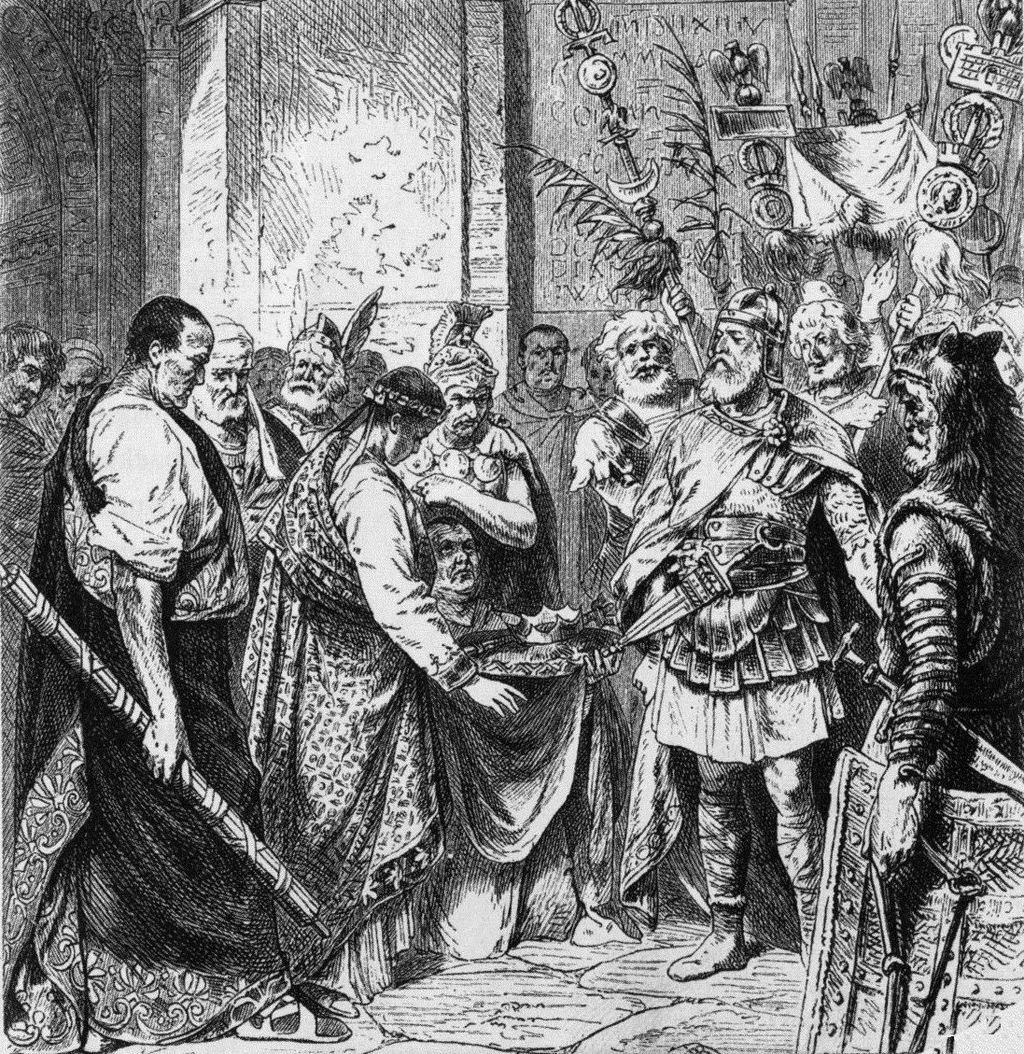
The commonly cited “fall” of the Western Roman Empire culminated on 04/09/476, when the Germanic leader Odoacer deposed the young emperor Romulus Augustulus in Ravenna, Italy. This event marked the formal end of imperial rule in the Western half of the Roman Empire, although it did not represent a sudden collapse. Instead, it concluded a prolonged period of political fragmentation, economic strain, and territorial loss that had been unfolding over several centuries.
The roots of this transformation can be traced back to structural changes within the empire. On 17/01/395, following the death of Emperor Theodosius I, the Roman Empire was permanently divided into Eastern and Western halves, governed separately from Constantinople and Ravenna or Rome. This division reduced administrative cohesion and limited coordinated responses to external threats. During the 5th century, the Western Empire faced increasing pressure from migrating and invading groups, including the Visigoths, Vandals, and Huns. The Visigothic sack of Rome on 24/08/410 and the Vandal sack in 06/455 exposed the vulnerability of the city that had long symbolized Roman authority.
By the mid-5th century, the Western Empire had lost control of key provinces, particularly North Africa, which had been a primary source of grain and tax revenue. The Vandals, under King Genseric, captured Carthage in 439, significantly weakening the Western economy. At the same time, internal instability intensified. Emperors were frequently installed and removed by military leaders, and central authority weakened due to repeated civil conflicts. The Roman military increasingly relied on foederati, or allied troops of non-Roman origin, whose allegiance was often tied to their commanders rather than the imperial government.
Economic challenges compounded these issues. Inflation, declining urban centers, and reduced trade networks contributed to a weakened fiscal system. Additionally, long-term demographic and environmental pressures, including disease outbreaks such as the Antonine Plague (165–180 AD) and possible climate variability, are identified in modern research as contributing factors that strained the empire’s resilience.
After deposing Romulus Augustulus, Odoacer did not claim the imperial title. Instead, he ruled Italy as king and formally recognized the authority of the Eastern Roman Emperor Zeno in Constantinople. This shift symbolized the end of Western imperial administration while maintaining a nominal link to the Eastern Empire. Meanwhile, the Eastern Roman Empire, later known as the Byzantine Empire, continued for nearly a millennium until the fall of Constantinople in 1453.
In Western Europe, Roman institutions did not disappear entirely. Elements of Roman law, Christianity, and administrative practices persisted and were adapted by successor kingdoms, including those established by the Franks, Visigoths, and Ostrogoths. These developments contributed to the shaping of early medieval European societies.
Why This Moment Matters:
The deposition of Romulus Augustulus on 04/09/476 is used as a historical marker because it represents the end of centralized imperial authority in the Western Roman Empire, even though many Roman systems and cultural elements continued in transformed forms across Europe.
#RomanEmpire #AncientHistory #476AD #Odoacer #ByzantineEmpire #MedievalEurope
#mooflife
#MomentOfLife
#WesternRomanEmpire
#FallOfRome
#Odoacer
#RomulusAugustulus
#MiddleAges
Primary Reference
fall-of-Rome

Explore the Life Moments of
 AI Twin