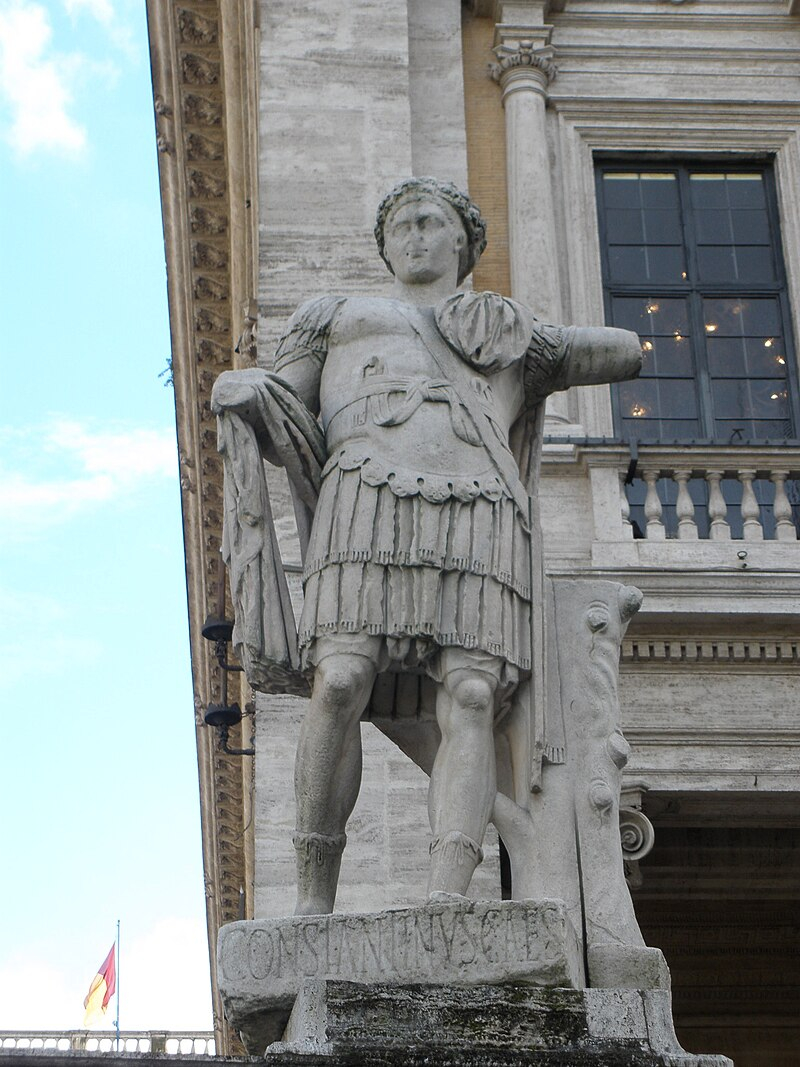
Constantine II Becomes Emperor of Rome
Italy
Roman Empire
Leadership
6 min read
Updated By: History Editorial Network (HEN)
Published:
Updated:
The proclamation of Constantine II as Augustus on 09/09/337 marked a key moment in the transition of power after the death of Constantine the Great, who died on 22/05/337 near Nicomedia. His passing ended a reign that had unified much of the Roman Empire under a single ruler. In the months that followed, authority did not immediately pass in a formalized manner, leading to a brief interregnum characterized by uncertainty and internal consolidation within the Constantinian dynasty.
Constantine II, the eldest surviving son, had long been positioned for leadership. He was named Caesar on 01/03/317 at a very young age, part of his father’s strategy to establish a stable line of succession. Over the following two decades, he held nominal authority in various western provinces under the supervision of senior officials and his father, gaining administrative and military exposure expected of an imperial heir. His brothers, Constantius II and Constans, were similarly elevated to the rank of Caesar in later years, forming a framework for shared rule.
After Constantine I’s death, a violent purge took place within the imperial family, primarily in Constantinople. Ancient sources such as Ammianus Marcellinus and other later historians describe the killing of several male relatives, including cousins and uncles of the three brothers. While the exact details and responsibility remain debated among historians, the outcome was clear: the removal of potential rivals left Constantine II, Constantius II, and Constans as the only remaining claimants with direct dynastic legitimacy.
On 09/09/337, the three brothers were formally proclaimed Augusti by the army, solidifying a system of collegiate rule. Constantine II assumed control over the westernmost regions, including Britain, Gaul, and Hispania; Constans governed Italy, Africa, and Illyricum; while Constantius II took charge of the eastern provinces. This division of the empire was intended to maintain administrative efficiency and stability across vast territories, though it also laid the groundwork for future rivalry among the brothers.
The arrangement of shared rule did not eliminate tensions within the dynasty. Disputes over territorial control soon emerged, particularly between Constantine II and Constans. These tensions escalated into open conflict, culminating in Constantine II’s death in 340 during a military campaign against his younger brother. The system established in 337 thus proved unstable, despite its initial aim of preserving unity within the empire.
#RomanEmpire #ConstantineII #ConstantinianDynasty #AncientHistory #ImperialSuccession
#mooflife
#MomentOfLife
#ConstantinianDynasty
#ConstantineIi
#Constans
#RomanEmpire
#PowerStruggles
Primary Reference
Constantine II (emperor)

Explore the Life Moments of
 AI Twin