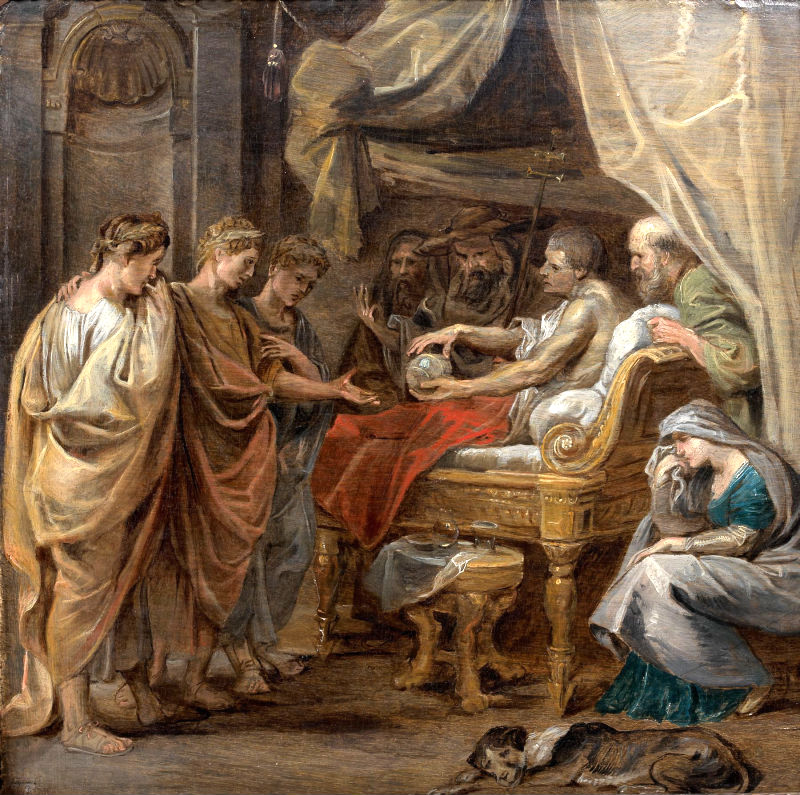
Death of Constantine the Great
Italy
Roman History
Ancient Empires
Dynastic Politics
5 min read
Updated By: History Editorial Network (HEN)
Published:
Updated:
The death of Constantine the Great on 22/05/337 at a suburban villa called Achyron, near Nicomedia in modern-day İzmit, Turkey, marked the end of a reign that had reshaped the Roman Empire’s political and religious landscape. At approximately 65 years of age, Constantine died while preparing for a planned military campaign against the Sassanid Persian Empire. His final days unfolded in Bithynia, where he had traveled seeking relief from illness, first stopping at the thermal baths of Helenopolis before being moved closer to Nicomedia.
One of the most documented aspects of Constantine’s final moments is his decision to undergo Christian baptism shortly before his death. Although he had supported Christianity throughout much of his reign, including issuing the Edict of Milan in 313, Constantine had remained a catechumen for decades. This was not unusual for the period, as some converts delayed baptism until late in life due to the belief that the sacrament cleansed all prior sins. For a ruler responsible for military campaigns, legal punishments, and political executions, the timing of baptism carried particular religious significance.
As his condition worsened, Constantine requested to be baptized, reportedly expressing a desire to receive the sacrament in the River Jordan, associated with the baptism of Jesus. However, due to his declining health, the ceremony took place near Nicomedia. He was baptized by Eusebius of Nicomedia, a prominent bishop of the time. Following the ritual, Constantine chose not to resume wearing the imperial purple, instead remaining clothed in the white garments traditionally worn by newly baptized Christians. He is said to have maintained this attire until his death.
Constantine’s passing initiated a period of uncertainty across the empire. Although he had established a dynastic framework by elevating his sons to positions of power during his lifetime, no immediate, orderly succession took place upon his death. His body was later transported to Constantinople, where he was buried in the Church of the Holy Apostles. In the months that followed, his sons Constantine II, Constantius II, and Constans would emerge as co-rulers, formally consolidating power later in 337.
#ConstantineTheGreat #RomanEmpire #AncientHistory #EarlyChristianity #Nicomedia
#mooflife
#MomentOfLife
#ConstantineTheGreat
#RomanEmpire
#ConstantinianDynasty
#PowerStruggle
#Christianity
Primary Reference
Constantine-I-Roman-emperor

Explore the Life Moments of
 AI Twin