Diocletian's Rise and the Roman Empire's Recovery
Rome
Roman Empire
Diocletian
4 min read
Updated By: History Editorial Network (HEN)
Published:
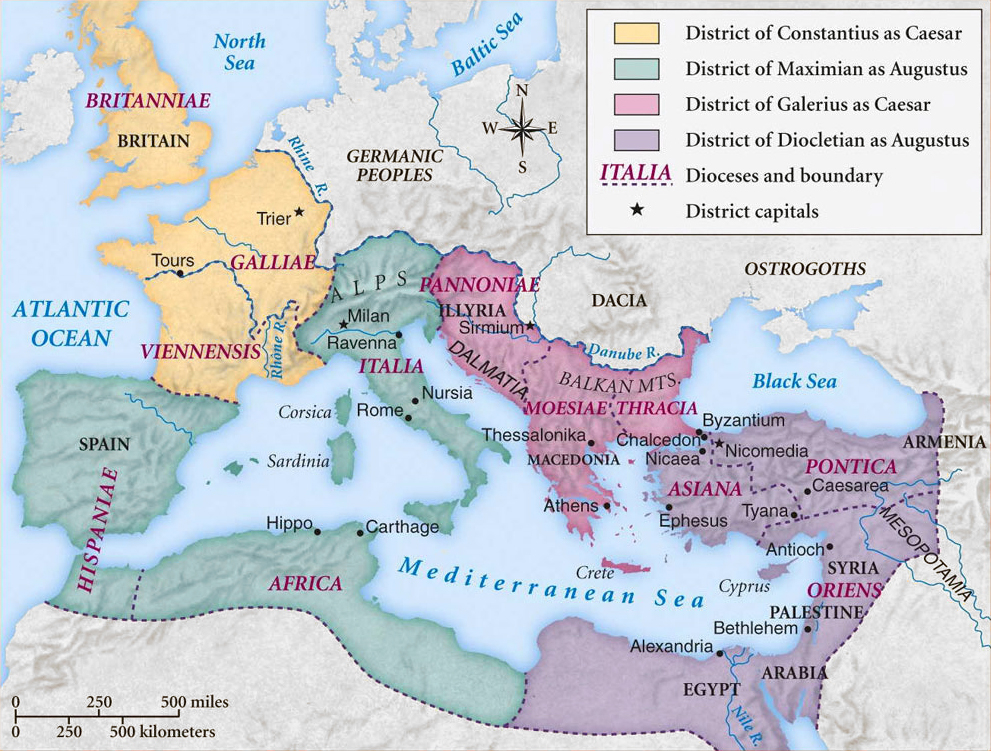
Diocletian's rise to power marked a pivotal transition in the Roman Empire, emerging from the turmoil of the Third Century Crisis, which had severely destabilized the empire. This crisis was characterized by a series of military defeats, economic decline, and political instability, leading to a rapid turnover of emperors and civil wars. Diocletian, recognizing the need for reform, implemented a series of measures aimed at restoring order and strengthening the empire. He divided the vast territory into smaller, more manageable units called dioceses, which improved administrative efficiency. Additionally, he established the Tetrarchy, a system of rule by four leaders, to ensure better governance and response to threats from external forces, particularly from the Germanic tribes and the Persian Empire. This restructuring allowed for more localized control and quicker military responses, which were crucial for the empire's survival during this tumultuous period.
The impact of Diocletian's reforms was profound, leading to a temporary stabilization of the empire. His economic policies included the introduction of a new currency and price controls to combat inflation, which had plagued the empire during the crisis. These measures helped to restore confidence in the economy, although they were not without their challenges. Diocletian also initiated a series of persecutions against Christians, viewing them as a threat to traditional Roman values and unity. This period of persecution, while controversial, was part of his broader strategy to reinforce the authority of the state. Overall, Diocletian's reign laid the groundwork for the eventual recovery of the Roman Empire, setting the stage for future emperors to build upon his reforms and navigate the complexities of a changing world.
#mooflife
#MomentOfLife
#Diocletian
#RomanEmpire
#ThirdCenturyCrisis
#Tetrarchy
#RomanHistory

Explore the Life Moments of
 AI Twin