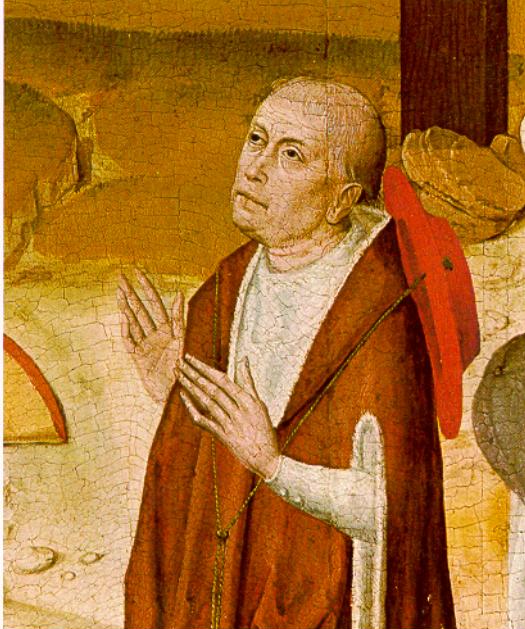
Nicholas of Cusa Anticipates Heliocentrism
Italy
Philosophy
History of Science
Astronomy
4 min read
Updated By: History Editorial Network (HEN)
Published:
Updated:
Nicholas of Cusa, a prominent philosopher and theologian, made significant contributions to the understanding of the cosmos during the early Renaissance. His writings, produced around the mid-15th century, reflect a forward-thinking perspective that predated the heliocentric model proposed by Copernicus. Cusa's philosophical approach to the universe suggested that the Earth was not the center of the cosmos, a radical idea at the time. He posited that the universe was infinite and that celestial bodies, including the sun, played a central role in the cosmic order. This perspective laid the groundwork for later scientific inquiry and challenged the geocentric views that dominated medieval thought.
The impact of Cusa's ideas on the development of astronomy cannot be overstated. His anticipation of heliocentrism contributed to a gradual shift in the understanding of the universe, influencing not only Copernicus but also later thinkers who would further explore the nature of celestial mechanics. Cusa's work exemplified the intermingling of science and philosophy during the Renaissance, a period marked by a revival of classical thought and an emphasis on empirical observation. His insights encouraged a more critical examination of established beliefs, ultimately paving the way for the scientific revolution that would follow. The transition from a geocentric to a heliocentric worldview marked a pivotal change in humanity's understanding of its place in the universe, highlighting the importance of Cusa's early contributions to this transformative period in history.
#mooflife
#MomentOfLife
#NicholasOfCusa
#Heliocentrism
#Copernicus
#RenaissancePhilosophy
#AstronomyHistory

Explore the Life Moments of
 AI Twin