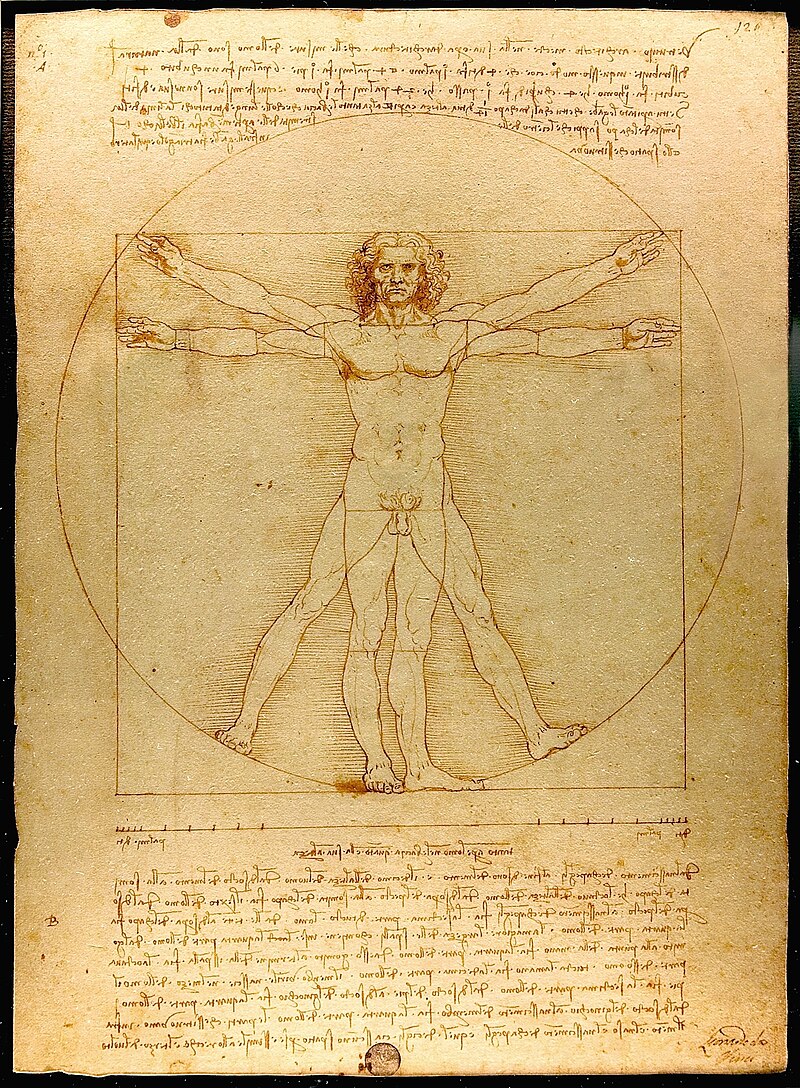
Leonardo da Vinci's Vitruvian Man
Italy
Art History
Renaissance Art
Human Anatomy
3 min read
Updated By: History Editorial Network (HEN)
Published:
Updated:
Leonardo da Vinci's Vitruvian Man is a drawing that exemplifies the Renaissance's deep interest in human anatomy and proportion, reflecting the influence of the ancient Roman architect Vitruvius. The drawing, created around 1490, illustrates the ideal human form based on Vitruvius' descriptions of the proportions of the human body. Vitruvius posited that the human body could be used as a model of proportion, and da Vinci's work visually interprets this concept by depicting a male figure in two superimposed positions, with his arms and legs extended within both a circle and a square. This geometric representation symbolizes the harmony between man and the universe, a central theme of Renaissance humanism.
The Vitruvian Man has had a lasting impact on art and science, serving as a bridge between the two disciplines. It not only showcases da Vinci's mastery of drawing and understanding of anatomy but also reflects the broader cultural movement of the Renaissance, which emphasized the study of classical antiquity and the human experience. The drawing has become an iconic symbol of the Renaissance, representing the era's quest for knowledge and the celebration of human potential. Its influence extends beyond art into various fields, including anatomy, architecture, and philosophy, making it a pivotal work in the history of Western thought.
#mooflife
#MomentOfLife
#LeonardoDaVinci
#VitruvianMan
#Renaissance
#HumanAnatomy
#Vitruvius

Explore the Life Moments of
 AI Twin