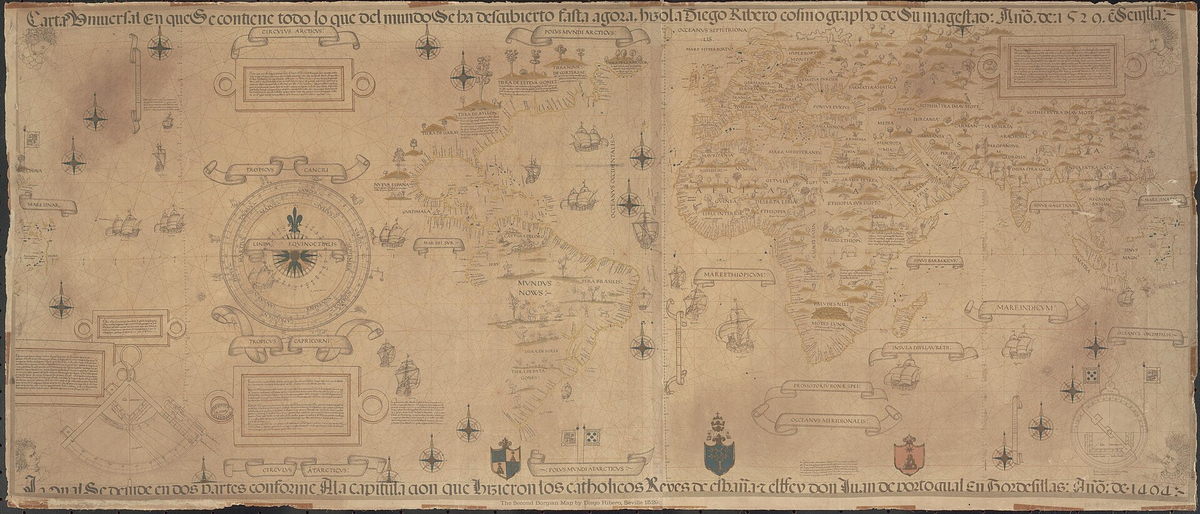
Division of newly discovered lands outside Europe between Spain and Portugal through Treaty of Tordesillas.
Portugal

Global Trade
3 min read
Updated By: History Editorial Network (HEN)
Published:
In 1494, the Treaty of Tordesillas was signed between Portugal and Spain, aiming to settle disputes over newly discovered lands outside Europe. The treaty established a meridian line 370 leagues west of Cape Verde, dividing the unexplored territories between the two countries. This agreement followed the Treaty of Alcacovas in 1479, which only divided Atlantic territories.
The Treaty of Tordesillas had a significant impact on global exploration and colonization by European powers. Portugal gained rights to lands east of the meridian, leading to their extensive maritime exploration efforts, including the discovery of Brazil by Pedro Álvares Cabral in 1500. Meanwhile, Spain was granted rights to lands west of the line, contributing to the Spanish colonization of the Americas.
This division of territories outside Europe ultimately influenced the future expansion of Portuguese and Spanish empires, shaping the cultural and linguistic landscape of regions in Africa, Asia, and the Americas. The treaty solidified the dominance of Portugal and Spain during the Age of Exploration and paved the way for their economic and imperial endeavors.
#TreatyofTordesillas #Portugal #Spain #Colonization #AgeofExploration #GlobalImpact

Explore the Life Moments of
 AI Twin