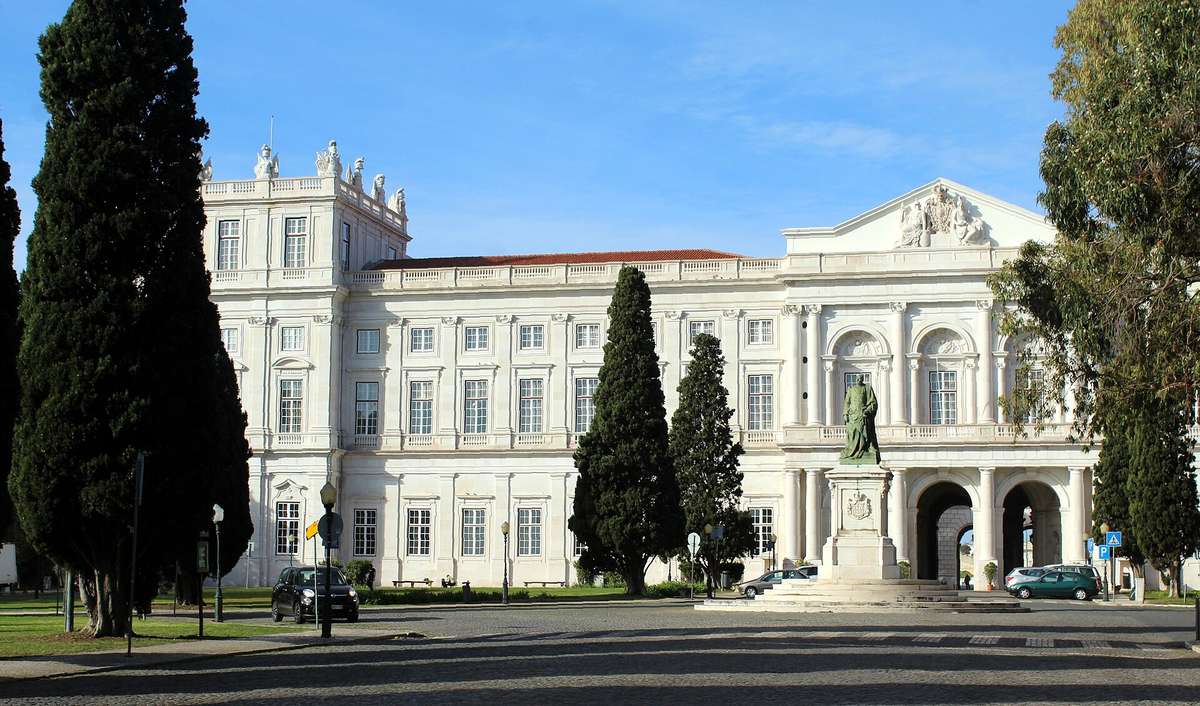
Construction commences for Lisbon's Ajuda National Palace, showcasing Baroque architectural style popular in the country.
Portugal

Architecture
3 min read
Updated By: History Editorial Network (HEN)
Published:
In 1795, the construction of the Ajuda National Palace in Lisbon began, showcasing the pinnacle of Baroque architecture in Portugal. The project was commissioned by Queen Maria I as a royal residence but was interrupted multiple times due to political and financial challenges. The palace's design was influenced by prominent architects and artists of the time, resulting in a stunning blend of Baroque aesthetics and neoclassical elements.
The completion of the Ajuda National Palace had a significant impact on the architectural landscape of Portugal, serving as a symbol of the nation's wealth and power during the Baroque period. The palace also played a role in shaping the cultural identity of the country, with its intricate design and opulent interiors attracting visitors from far and wide.
Today, the Ajuda National Palace stands as a testament to the grandeur of Baroque architecture in Portugal, offering a glimpse into the country's rich history and artistic heritage. Its legacy continues to inspire architects and historians, showcasing the enduring influence of Baroque design in the region.
#AjudaNationalPalace #BaroqueArchitecture #PortugalHeritage

Explore the Life Moments of
 AI Twin