Invasion triggers WWII outbreak, Germany attacks and invades.
Poland

Global Conflict
10 min read
Updated By: History Editorial Network (HEN)
Published:
On September 1, 1939, the world was plunged into the horrors of World War II when Nazi Germany invaded Poland. This invasion, meticulously planned and ruthlessly executed, marked the beginning of a conflict that would engulf the globe and become one of the deadliest wars in human history. The attack on Poland not only triggered the outbreak of World War II but also set the stage for the devastating events that would follow over the next six years.
Background: Rising Tensions in Europe
Throughout the 1930s, Europe was a continent on edge. The Treaty of Versailles, which ended World War I, had imposed harsh penalties on Germany, leading to widespread economic hardship and political instability. Adolf Hitler and the Nazi Party exploited this discontent, coming to power in 1933 with promises of restoring Germany’s former glory. Central to Hitler’s vision was the expansion of German territory, especially into Eastern Europe, which he believed was necessary for Germany’s survival and dominance.
Poland, restored as an independent nation after World War I, stood in the way of Hitler’s ambitions. The country was strategically located between Germany and the Soviet Union and possessed valuable resources and territory that Hitler coveted. Moreover, the Nazi ideology of Lebensraum (living space) explicitly targeted Eastern Europe for German expansion, with Poland being a key target.
The Molotov-Ribbentrop Pact
One of the most significant developments leading up to the invasion was the signing of the Molotov-Ribbentrop Pact on August 23, 1939. This non-aggression treaty between Nazi Germany and the Soviet Union shocked the world, as it brought together two ideologically opposed regimes. The secret protocols of the pact outlined the division of Eastern Europe into German and Soviet spheres of influence, with Poland slated to be partitioned between the two powers.
This agreement ensured that Germany could invade Poland without fear of Soviet intervention, giving Hitler the green light to launch his assault.
The Invasion: Blitzkrieg Unleashed
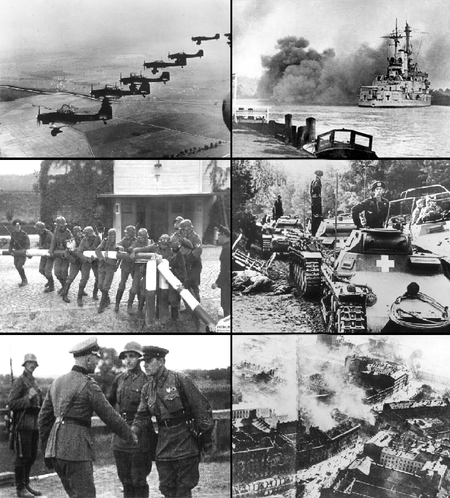
At dawn on September 1, 1939, Germany launched its invasion of Poland with a coordinated assault that introduced the world to the concept of Blitzkrieg or "lightning war." This military strategy emphasized speed and surprise, combining the use of fast-moving infantry, tanks, and airpower to overwhelm the enemy.
The invasion began with aerial bombardments by the Luftwaffe, targeting Polish cities, military installations, and communication lines. This was swiftly followed by a ground invasion, with German troops crossing the border from the north, west, and south. The Polish military, though brave and determined, was caught off guard and outmatched by the superior German forces.
One of the most infamous events of the invasion was the bombing of the town of Wieluń, which is often considered one of the first terror bombings of the war, deliberately targeting civilians to sow chaos and fear.
Poland’s Struggle and the Soviet Invasion
Despite being outnumbered and outgunned, Polish forces put up a valiant resistance. Key battles, such as the Battle of Bzura, saw the Poles temporarily halt the German advance, but the overwhelming power of the German military eventually proved too much.
On September 17, 1939, the situation for Poland worsened dramatically when the Soviet Union, as per the Molotov-Ribbentrop Pact, invaded from the east. The Red Army quickly overran the poorly defended eastern regions of Poland, sealing the country’s fate. With enemies advancing from both sides, the Polish government was forced to flee into exile, and by early October, the country was effectively under German and Soviet occupation.
The Aftermath: The Outbreak of World War II
The invasion of Poland had immediate and far-reaching consequences. On September 3, 1939, in response to Germany’s aggression, Britain and France declared war on Germany, honoring their commitments to defend Polish sovereignty. This marked the official start of World War II, although initially, there was little direct military action on the Western Front in what came to be known as the "Phoney War."
For Poland, the invasion marked the beginning of a brutal occupation. Under Nazi rule, Poland became the site of some of the worst atrocities of the Holocaust, as well as a brutal campaign to exterminate or enslave the Polish population. The Soviet occupation of eastern Poland also brought significant suffering, including mass deportations and the massacre of Polish officers and intellectuals in the Katyn Forest in 1940.
#InvasionOfPoland #WorldWarII #Blitzkrieg #PolishHistory #NaziGermany #SovietUnion #WWIIHistory #MomentsOfLife #MoofLife_Moment #MoofLife
Primary Reference
The Invasion of Poland

Explore the Life Moments of
 AI Twin