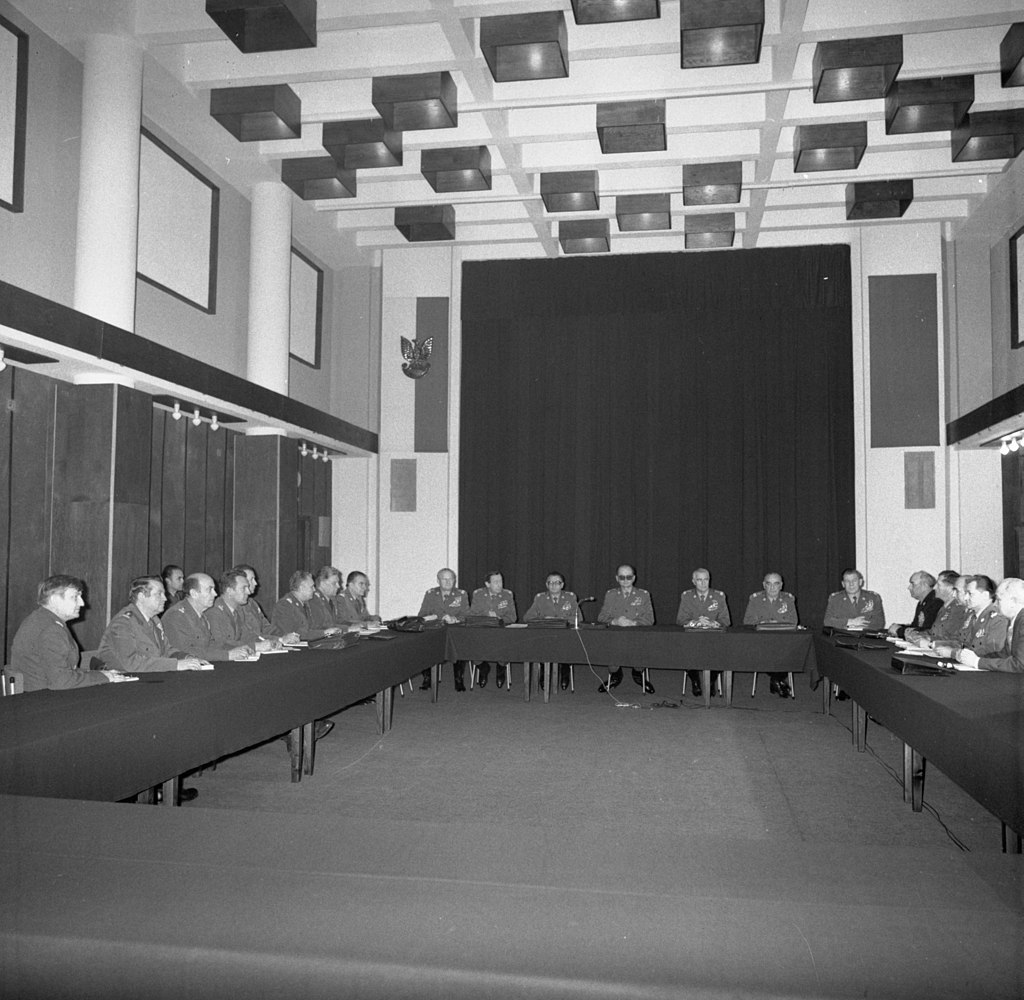
Government declares martial law, imposing restrictions, suspending rights, and detaining activists to restore order.
Poland

Political
StruggleForFreedom
3 min read
Updated By: History Editorial Network (HEN)
Published:
In December 13, 1981, the Polish government declared Martial Law to quell social unrest and curb the influence of the Solidarity movement, a trade union advocating for workers' rights and political reforms. Under Martial Law, strict censorship, curfews, and bans on gatherings were imposed, leading to arrests of thousands of activists, journalists, and opposition leaders.
The crackdown aimed to restore order and stability, as the communist regime viewed Solidarity as a threat to its power. The move received international condemnation, with sanctions imposed by Western countries in response. Despite the restrictions, the resistance persisted underground, keeping the spirit of dissent alive.
Eventually, the Martial Law was lifted in 1983, but its impact on Polish society and the opposition movement was profound. It fueled anti-government sentiments, bolstered solidarity among the populace, and eroded trust in the ruling authorities. The event remains a significant chapter in Poland's history, representing a struggle for freedom and democracy against authoritarian rule.
#Poland #MartialLaw #Solidarity #PoliticalRepression #StruggleForFreedom
Primary Reference
Martial law in Poland - Wikipedia

Explore the Life Moments of
 AI Twin