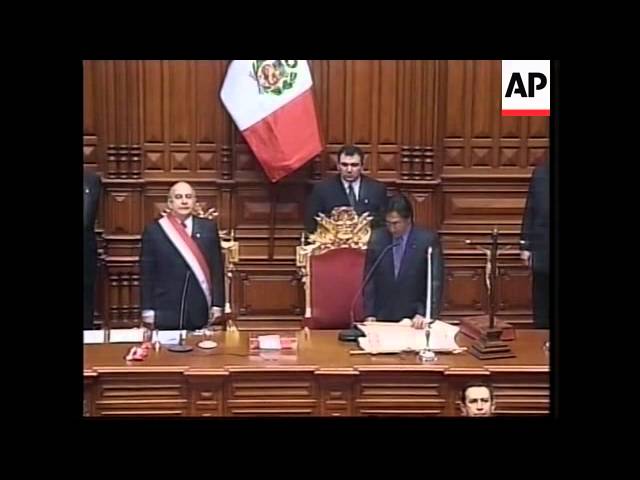
Alejandro Toledo Assumes Presidency Following Congressional Elections in Peru
Peru
Politics
Elections
Leadership
3 min read
Updated By: History Editorial Network (HEN)
Published:
Updated:
In 2001, Alejandro Toledo was elected as the President of Peru, marking a significant transition in the country's political landscape following a period of turmoil. His presidency came after a caretaker government led by Valentín Paniagua, which was established to oversee new presidential and congressional elections. Toledo's administration, which lasted until 2006, was characterized by efforts to address the socio-economic challenges facing Peru, particularly in the wake of the violent internal conflict that had plagued the nation for decades. Despite his initiatives aimed at promoting inclusivity and economic growth, the legacy of the conflict continued to marginalize many communities, particularly those who had suffered the most during the violence. Toledo's government faced the daunting task of reconciling a divided society while fostering national unity and development. His presidency is often viewed as a pivotal moment in Peru's journey towards democracy and stability, yet the ongoing struggles of marginalized populations highlight the complexities of post-conflict recovery in the region.

Explore the Life Moments of
 AI Twin