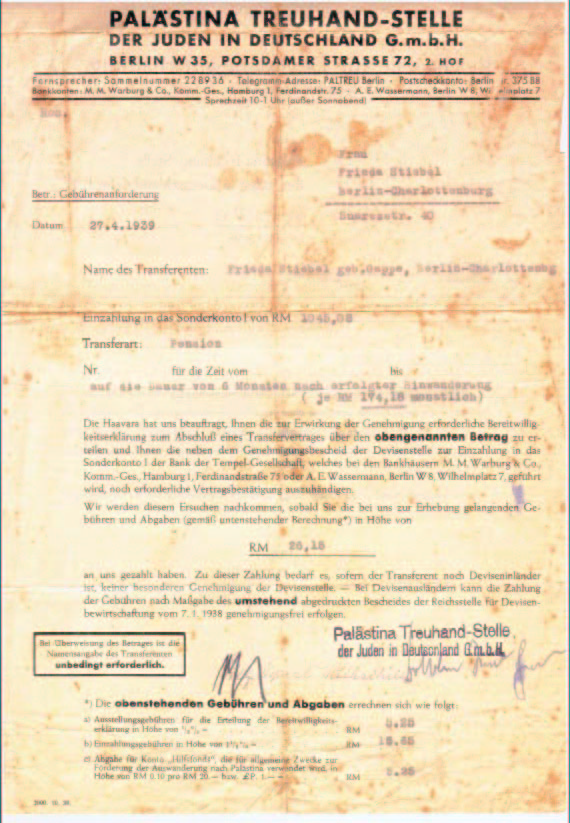
Signing of the Haavara Agreement
Palestine
Politics
International Relations
3 min read
Updated By: History Editorial Network (HEN)
Published:
Updated:
On August 25, 1933, the Haavara Agreement was signed between Nazi Germany and the Jewish Agency for Palestine, allowing the legal emigration of German Jews to Palestine. This controversial agreement facilitated the transfer of Jewish assets from Germany to British-controlled Palestine by enabling emigrants to deposit their money in German banks, which was then used to purchase German goods exported to Palestine. Upon arrival, Jewish immigrants could then recover a portion of their funds in Palestine.
The agreement was negotiated in response to the growing persecution of Jews under the Nazi regime and the economic boycott of German goods by Jewish communities worldwide. For Zionist leaders, the deal was seen as a way to rescue German Jews and strengthen Jewish settlement in Palestine. For Nazi Germany, it aligned with their policy of Jewish emigration while also supporting German exports.
Between 1933 and 1939, an estimated 50,000 German Jews emigrated to Palestine under the Haavara Agreement, transferring millions of Reichsmarks worth of German goods. Despite its role in facilitating Jewish migration, the agreement remained highly controversial, with critics condemning any form of economic cooperation with the Nazi regime. Nonetheless, it played a significant role in shaping Jewish migration to Palestine before World War II.
#mooflife
#MomentOfLife
#HaavaraAgreement
#JewishImmigration
#AdolfHitler
#FifthAliyah
#Palestine
Primary Reference
Haavara Agreement

Explore the Life Moments of
 AI Twin