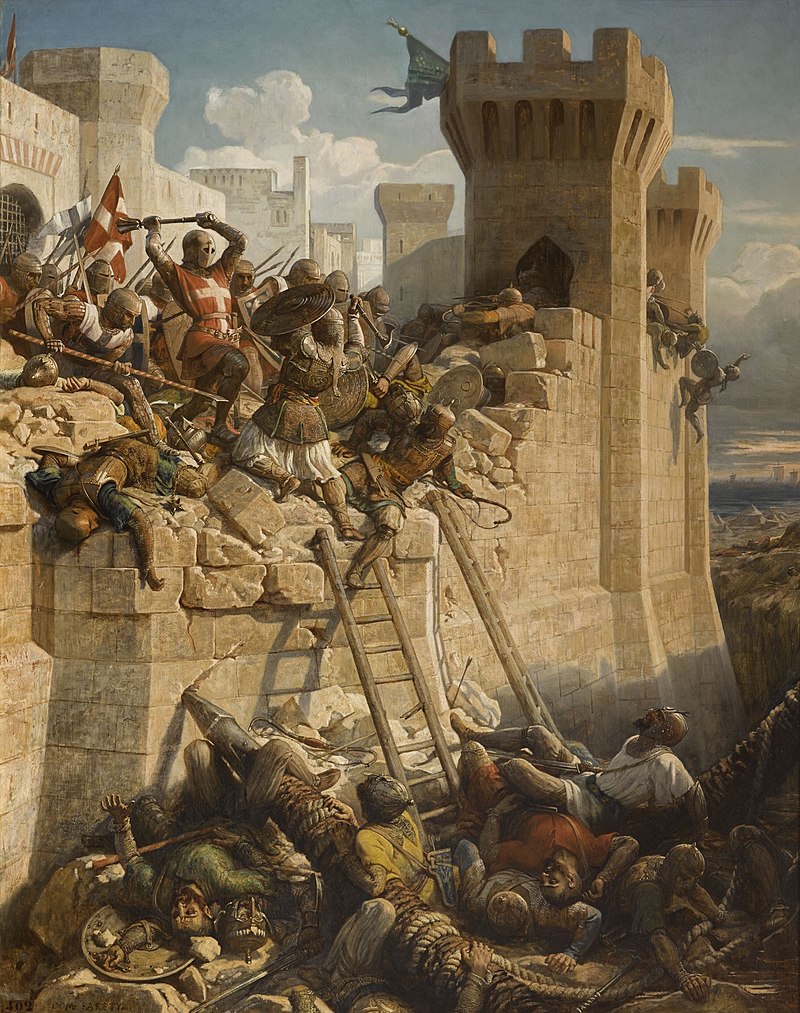
Siege of Acre (1291)
Palestine
Cultural Studies
Middle Eastern Studies
3 min read
Updated By: History Editorial Network (HEN)
Published:
Updated:
In 1291, the Mamluks launched a decisive assault on Acre, marking the end of the Kingdom of Jerusalem's capital and its last stronghold. This event signified a pivotal moment in the history of the Crusades, as it not only represented the military prowess of the Mamluks but also highlighted the waning interest in crusading among Europeans. Over the years, the concept of what constituted a 'good Christian life' evolved, leading to a diminished focus on seeking redemption through military action in the Holy Land. Concurrently, heretical beliefs within Europe began to take precedence, diverting attention away from the struggles in Palestine. In response to the threats faced in the region, military orders were established, composed of pious knights who combined monastic discipline with martial skills. Among these, the Knights Templar gained prominence, named after their headquarters located in the al-Aqsa mosque, which they referred to as the Temple of Solomon. The nearby Dome of the Rock also played a significant role in their operations. The fall of Acre not only marked the decline of Latin Christian influence in the region but also set the stage for a shift in focus within Europe, as the ideals of crusading began to fade into history.
#mooflife
#MomentOfLife
#Mamluks
#Acre
#Crusades
#KnightsTemplar
#KingdomOfJerusalem

Explore the Life Moments of
 AI Twin