Mongol Empire's Military Campaigns and Their Impact on Palestine
Palestine
Military
Mongol Empire
Palestine
3 min read
Updated By: History Editorial Network (HEN)
Published:
Updated:
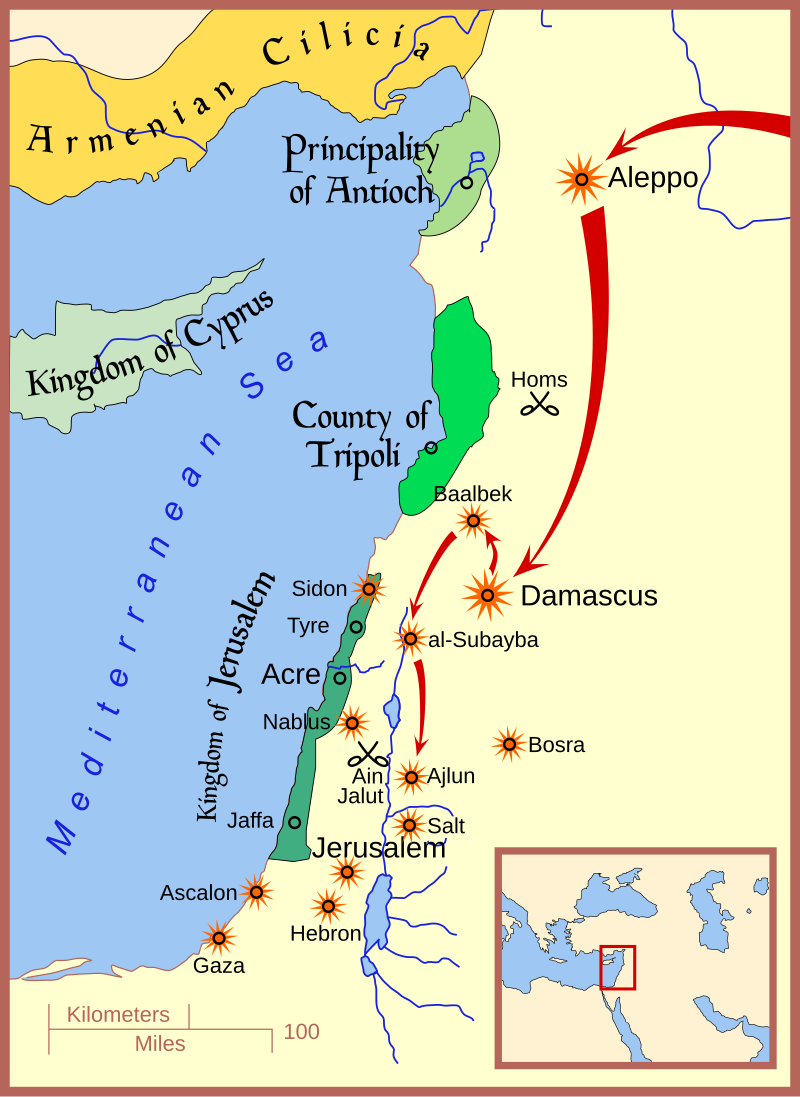
In the late 13th century, the Mongol Empire expanded rapidly, reaching Palestine for the first time in 1260. This incursion was led by the Nestorian Christian general Kitbuqa, who commanded a Mongol army that aimed to establish control over the region. Hulegu Khan, the Mongol leader, communicated with Louis IX of France, indicating that Jerusalem had been returned to Christian control as part of the Franco-Mongol alliance. However, the situation changed dramatically when Hulegu had to return to Mongolia following the death of Möngke Khan, leaving Kitbuqa with a diminished force. This led to a critical confrontation with the Mamluks, who were under the command of Baybars. The pivotal Battle of Ain Jalut, fought in the Jezreel Valley, resulted in a decisive victory for the Mamluks. This battle not only halted the Mongol advance into Palestine but also marked a significant turning point in the region's power dynamics, establishing the Mamluks as a dominant force in the area. The Mongol raids into Palestine thus represent a crucial moment in the historical interplay between the Mongol Empire and the Islamic world, highlighting the complexities of alliances and conflicts during this tumultuous period.
#mooflife
#MomentOfLife
#MongolEmpire
#Palestine
#BattleOfAinJalut
#Mamluks
#Franco-mongolAlliance

Explore the Life Moments of
 AI Twin