Umayyad Caliphate Rise in Sindh
Pakistan
Event
Cultural Exchange
4 min read
Updated By: History Editorial Network (HEN)
Published:
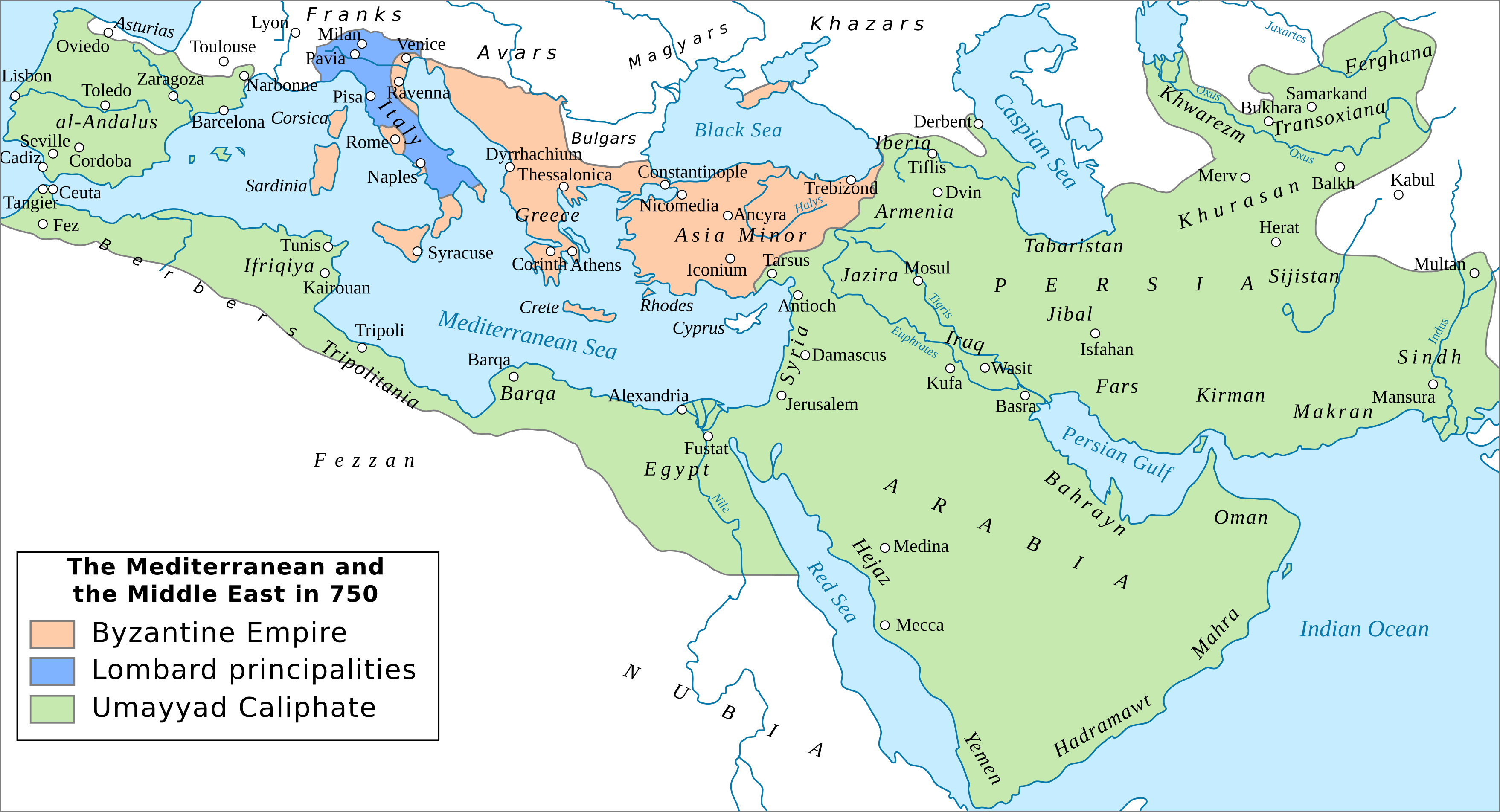
In 711, the Umayyad Caliphate was established in Sindh, marking a significant historical development in the region. The Umayyad Caliphate, a powerful Islamic empire, extended its influence to Sindh through the conquest led by Muhammad bin Qasim, a young general.
Prior to the Umayyad rule, Sindh was under the control of the Hindu rulers, including Raja Dahir. The conquest by the Umayyad forces brought about a shift in power structures and introduced Islam to the region. Muhammad bin Qasim's military campaigns were successful, leading to the consolidation of Umayyad authority in Sindh.
The establishment of the Umayyad Caliphate in Sindh had a lasting impact on the region's social, cultural, and political landscape. It marked the beginning of Islam's influence in the Indian subcontinent and paved the way for the spread of the religion in the region. The Umayyad rule introduced new administrative systems, trade networks, and architectural styles to Sindh, leaving a lasting legacy in the area.
Furthermore, the establishment of the Umayyad Caliphate in Sindh facilitated cultural exchanges between the Arab and South Asian worlds, leading to a rich cultural synthesis in the region. The presence of Islamic scholars, poets, and traders influenced local traditions and customs, contributing to the diversity of Sindh's cultural heritage.
Overall, the establishment of the Umayyad Caliphate in Sindh was a pivotal moment in the region's history, ushering in a new era of Islamic influence and shaping the socio-political landscape of Sindh for centuries to come.
#UmayyadCaliphate #Sindh #Conquest #MuhammadbinQasim #CulturalExchange #IslamicInfluence #HistoricalEvent #Pakistan
Primary Reference
AD 711 - Wikipedia

Explore the Life Moments of
 AI Twin