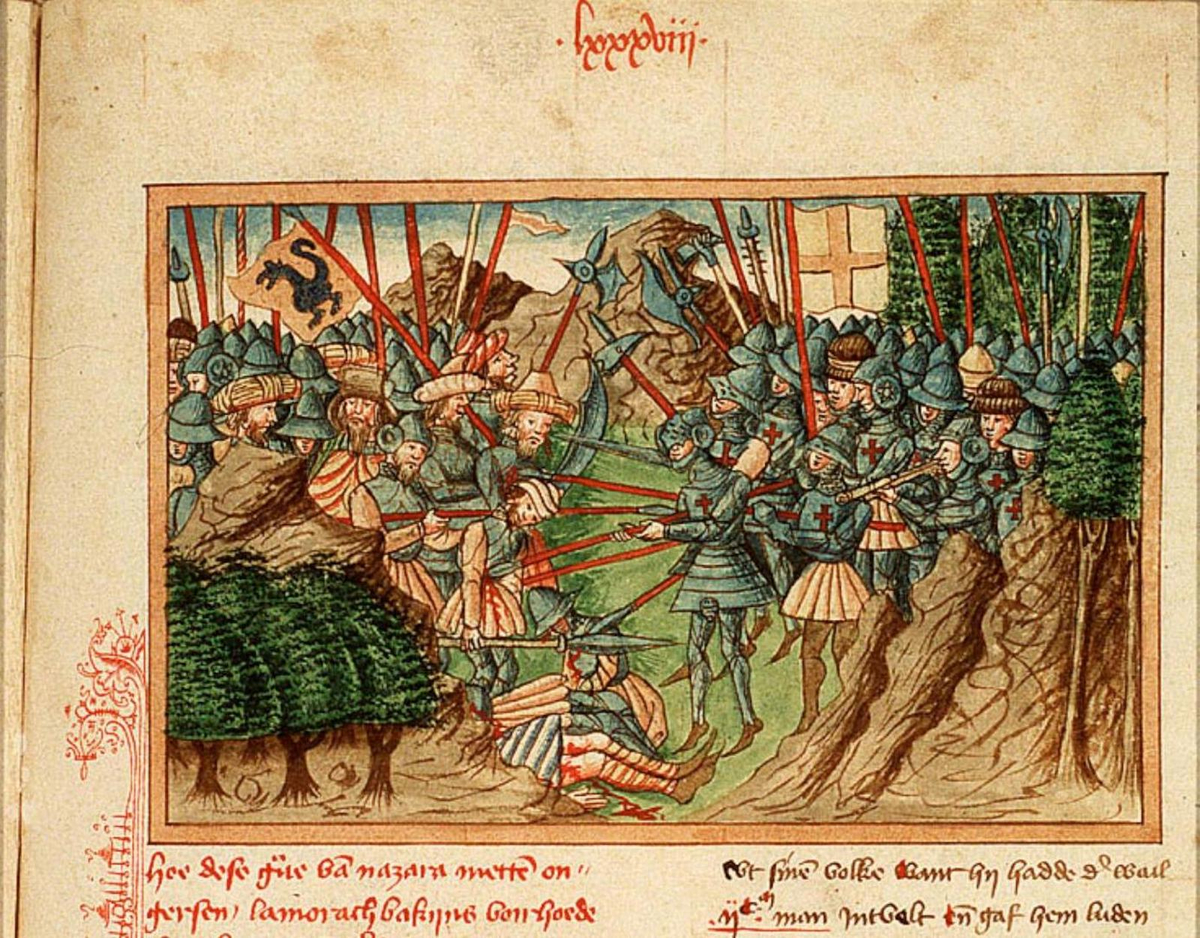
Ottoman Victory in Kosovo Battle
Kosovo Plain, near present day Pristina, Kosovo

Military
Conflict
9 min read
Updated By: History Editorial Network (HEN)
Published:
Updated:
The Battle of Kosovo, commonly dated to 15 June 1389 in the Julian / Old Style calendar and often referenced in modern sources as 28 June 1389 in the Gregorian / New Style calendar, was fought on the Kosovo Plain, or Kosovo Polje, near present-day Pristina. The battle marked a turning point in the struggle between the Ottoman Empire and the Serbian-led Balkan forces. The confrontation brought together the army of Ottoman Sultan Murad I and a coalition led by Serbian Prince Lazar Hrebeljanović. Although historians continue to debate the exact scale of the battle and some tactical details, the conflict is widely recognized as one of the defining military encounters in Southeast European history.
The Ottoman Empire had already expanded steadily into the Balkans during the 14th century, taking advantage of political fragmentation among regional states after the decline of the Serbian Empire that had been established under Stefan Dušan. Prince Lazar emerged as one of the most influential Serbian rulers attempting to resist Ottoman advances. On the Ottoman side, Sultan Murad I had strengthened imperial control across Anatolia and southeastern Europe, building a disciplined military structure that included cavalry forces and elite Janissary units.
The battle itself resulted in devastating losses for both armies. Sultan Murad I was killed during or shortly after the fighting, making him the only Ottoman sultan known to have died on a battlefield. Prince Lazar was also captured and executed after the conflict. Contemporary and near-contemporary accounts differ regarding the exact sequence of events, but the losses suffered by the Serbian nobility severely weakened organized resistance in the region. Murad’s son, Bayezid I, quickly consolidated Ottoman authority after the battle and continued campaigns deeper into the Balkans.
In the decades that followed, many Balkan territories gradually became Ottoman vassals or were directly incorporated into the empire. The battle did not immediately erase Serbian political structures, but it accelerated the decline of independent Serbian power and opened routes for further Ottoman expansion toward Bosnia, Hungary, and Central Europe. Ottoman influence in the Balkans continued for centuries, shaping administration, religion, trade networks, architecture, and social life throughout much of Southeast Europe.
The Battle of Kosovo also developed a lasting cultural and symbolic legacy. In Serbian epic poetry and folklore, Prince Lazar became associated with sacrifice, faith, and national endurance. Stories surrounding the battle, including accounts of heroism and betrayal, were preserved through oral tradition for generations. The Kosovo narrative later played an important role in Serbian national identity, especially during periods of political upheaval in the 19th and 20th centuries.
Historical Significance:
The Battle of Kosovo remains historically important not only because of its military consequences, but also because of how it continued to influence collective memory across the Balkans for centuries. Its combination of political change, dynastic loss, Ottoman expansion, and cultural mythology turned the event into both a historical milestone and a powerful symbol in regional history.
Summary:
The Battle of Kosovo was a pivotal conflict that took place in the late 14th century, marking a crucial turning point in the power dynamics of the Balkan region. The Ottoman Empire's victory in this battle effectively ended Serbian dominance, which had been a significant force in the area. This defeat not only diminished Serbian influence but also facilitated the Ottoman Empire's expansion into Europe, altering the political landscape of the region. The battle is often viewed as a foundational moment for the Ottomans, as it allowed them to consolidate their power and extend their territories further into the Balkans. The implications of this victory were profound, leading to a series of subsequent conflicts and territorial acquisitions by the Ottomans, which would shape the history of Southeast Europe for centuries to come. The decline of Serbian power initiated a period of Ottoman hegemony that would last for several hundred years, fundamentally changing the cultural and political fabric of the region.
#OttomanEmpire
#BattleOfKosovo
#SerbianHistory
#BalkanExpansion
#14thCenturyConflicts
#BalkanHistory
#MuradI
#PrinceLazar
#Kosovo1389
#MedievalHistory

Explore the Life Moments of
 AI Twin