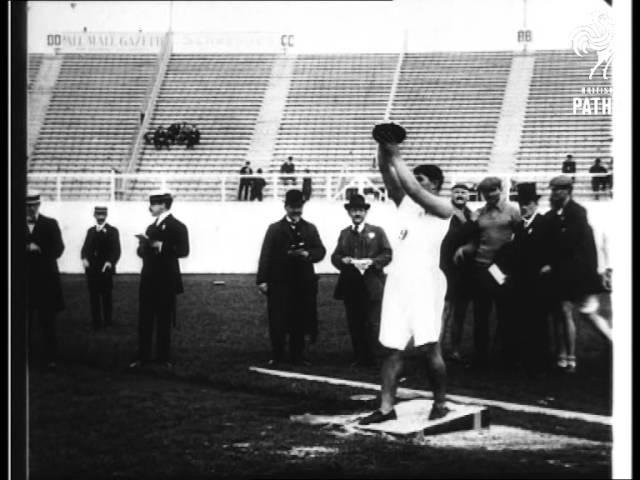
United Kingdom, London Olympics from 27-Apr-1908 to 31-Oct-1908
Greece
Sport
10 min read
Updated By: History Editorial Network (HEN)
Published:
In the year of 1908, the city of London was abuzz with excitement as it played host to the Olympic Games. This marked the first time the United Kingdom had the honor of hosting the prestigious event. The games took place from April to October and attracted athletes from 22 nations, competing in 110 events across 22 sports.
The 1908 Summer Olympics, held in London, United Kingdom, from April 27 to October 31, 1908, marked a significant milestone in the history of the modern Olympic Games. Originally scheduled to be held in Rome, Italy, the Games were relocated to London after the eruption of Mount Vesuvius in 1906 necessitated a change of venue. The 1908 London Olympics were notable for their improved organization, greater international participation, and the introduction of several key traditions and innovations that have become integral to the Olympic movement.
The decision to move the Games to London was made by the International Olympic Committee (IOC), which sought a reliable and well-prepared host city. London, with its extensive infrastructure and experience in hosting large-scale events, proved to be an excellent choice. The British government and the organizing committee, led by Lord Desborough, invested considerable resources into ensuring the success of the Games.
The main venue for the 1908 Olympics was the White City Stadium, constructed specifically for the event. The stadium, with a seating capacity of 68,000 spectators, featured a 660-yard track, a swimming pool, and facilities for various sports. It became the focal point of the Games, hosting the opening and closing ceremonies, as well as many of the athletic events.
The opening ceremony on July 13, 1908, was a grand affair, attended by King Edward VII and Queen Alexandra. The ceremony featured a parade of athletes from 22 nations, a significant increase in international participation compared to previous Games. For the first time, athletes marched behind their national flags, establishing a tradition that continues to this day. The ceremony also included the inaugural use of the Olympic oath, recited by an athlete on behalf of all competitors, emphasizing the principles of fair play and sportsmanship.
One of the most memorable events of the 1908 London Olympics was the marathon, which became the standard distance of 26 miles and 385 yards (42.195 kilometers). The race began at Windsor Castle and finished at White City Stadium, with the extra 385 yards added to allow the finish line to be in front of the royal box. This distance was later adopted as the official marathon length for all future Olympics.
The marathon was marked by dramatic and controversial moments. Dorando Pietri of Italy was the first to enter the stadium, but he collapsed multiple times due to exhaustion. With the assistance of officials, he managed to cross the finish line but was subsequently disqualified for receiving help. The gold medal was awarded to Johnny Hayes of the United States, who finished second. Pietri's courageous effort, however, won him widespread admiration and a special gold cup presented by Queen Alexandra.
In athletics, American athletes continued to excel, winning 16 gold medals. Notable performances included Mel Sheppard, who won gold in the 800 meters and 1500 meters, and John Hayes, who triumphed in the marathon. British athletes also performed well, with Wyndham Halswelle winning gold in the 400 meters after a controversial race that saw his competitors disqualified for interference.
The swimming events were held in a specially constructed pool at White City Stadium, marking the first time swimming competitions took place in a standardized venue. Henry Taylor of Great Britain emerged as a standout swimmer, winning three gold medals in the 400 meters, 1500 meters, and 4x200 meters freestyle relay.
The 1908 London Olympics also saw the introduction of diving as an Olympic sport, with events for men in platform and springboard diving. George Hodgson of Canada won two gold medals in diving, establishing himself as one of the top divers of the era.
Gymnastics competitions at the 1908 Olympics featured individual and team events, with Italian gymnasts dominating the field. Alberto Braglia won gold in the individual all-around, while the Italian team secured victory in the team event.
Fencing was another highlight of the 1908 Games, with athletes competing in foil, épée, and sabre events. The French fencers performed exceptionally well, with Lucien Gaudin and Gaston Alibert winning gold medals in their respective disciplines.
One of the unique aspects of the 1908 London Olympics was the inclusion of winter sports, albeit on a limited scale. Figure skating events were held, making it the first time winter sports were part of the Olympic program. Nikolai Panin of Russia won gold in men's special figures, while Ulrich Salchow of Sweden claimed victory in men's singles.
The 1908 London Olympics also featured several sports that were later discontinued, such as tug of war, motor boating, and polo. The tug of war competition was particularly notable, with teams from Great Britain and Sweden competing fiercely. The British team, composed mainly of City of London Police officers, won the gold medal.
The closing ceremony on October 31, 1908, marked the end of a successful and historic Olympic Games. Medals were awarded to the winners, and the athletes bid farewell to London, leaving behind a legacy of improved organization and increased international cooperation.
The 1908 London Olympics played a pivotal role in shaping the future of the Olympic movement. The introduction of the national flag parade, the standardized marathon distance, and the use of a dedicated Olympic Stadium set new standards for future Games. The success of the London Olympics demonstrated the potential of the Olympics to unite nations and celebrate athletic excellence on a global scale.
#MomentsOfLife #MoofLife_Moment #MoofLife #LondonOlympics #UnitedKingdom #HistoricEvent #Sportsmanship
Primary Reference
London 1908 Summer Olympics - Athletes, Medals & Results

Explore the Life Moments of
 AI Twin