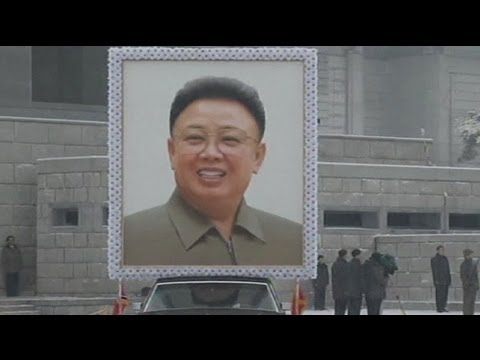
Transition in North Korean leadership after Kim Jong Il's death, marked by mourning and international concern.
North Korea
Political
International Relations
5 min read
Updated By: History Editorial Network (HEN)
Published:
Updated:
The death of Kim Jong Il marked a pivotal transition in North Korean leadership. Kim Jong Il, who had been the Supreme Leader of North Korea since 1994, was succeeded by his youngest son, Kim Jong Un. The transition in power was characterized by a tightly controlled state media announcement that emphasized Kim Jong Un as the "Great Successor" to his father's leadership.
Kim Jong Il's death had significant ramifications, both domestically and internationally. Domestically, it led to a period of intense state mourning, with mass displays of grief by the citizenry. The government enforced a strict observance of mourning practices, and loyalty to the new leader was promoted extensively through state propaganda. This period saw heightened security and vigilance within the country to prevent any potential challenges to the new leader's authority.
Internationally, Kim Jong Il's death raised concerns about potential instability within the region. Neighboring countries and global powers closely monitored the situation, apprehensive about the impact of leadership changes in a state known for its nuclear ambitions and isolated economy. Kim Jong Un's accession to power prompted analysts to speculate about the future policy directions and stability of North Korea.
Despite his youth and relative inexperience, Kim Jong Un quickly consolidated power. He took control of the Korean People's Army and replaced key military officials to secure his position. Kim Jong Un's rule has since been marked by a continuation of his father's policies, including the development of nuclear capabilities and maintaining the regime's tight control over the North Korean populace.
The succession highlighted the hereditary nature of North Korea’s leadership, reinforcing the Kim family's dynastic rule. This moment reaffirmed the central role of the military and party in supporting the new leader's legitimacy and ensuring the continuity of the regime's ideology and governance style.
#LeadershipTransition #NorthKorea #DynasticRule #KimJongUn #PoliticalStability #MoofLife
Primary Reference
Kim Jong Il - Wikipedia
Explore the Life Moments of
 AI Twin