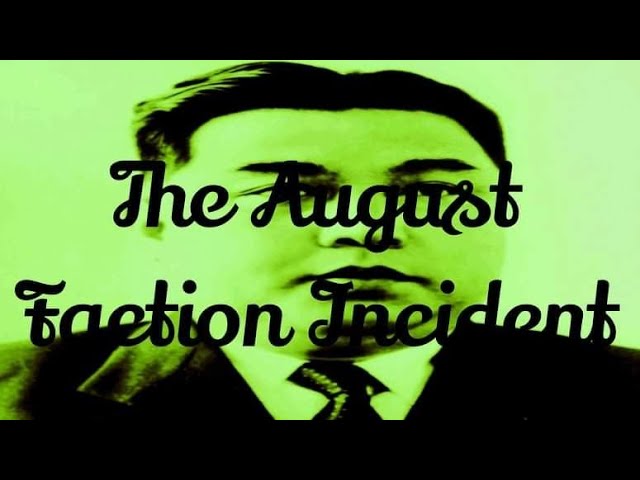
The August Faction Incident: Power struggle in North Korea leads to failed coup and purges.
North Korea
Political
4 min read
Updated By: History Editorial Network (HEN)
Published:
Updated:
The August Faction Incident was a critical point in North Korean history marked by an internal power struggle. The conflict arose between Kim Il Sung and members of two factions within the ruling Worker’s Party of Korea: the Soviet-Korean faction, which had strong ties to the Soviet Union, and the Yan'an faction, which had connections to China. Dissatisfaction with Kim Il Sung's leadership and policies drove members of these factions to conspire to remove him from power.
The attempted coup took place during a Central Committee Plenary Meeting of the Worker’s Party. Members of the Soviet-Korean and Yan'an factions criticized Kim Il Sung's growing cult of personality and the centralization of power. They planned to leverage the meeting to oust him from his position. However, their efforts were thwarted as Kim Il Sung had been forewarned and took measures to secure his position. The failed coup reinforced his control over the party and the nation.
The immediate result was a purge of the dissenting members. Key figures involved in the coup attempt faced severe repercussions, including arrest, exile, or execution. This crackdown effectively silenced opposition and solidified Kim Il Sung's authority, further entrenching the monolithic leadership structure that would characterize North Korea's political regime.
The long-term impact of the August Faction Incident ensured that Kim Il Sung's leadership remained uncontested, shaping the political landscape of North Korea for decades. It marked the beginning of an era where dissent within the party was not tolerated, reinforcing a highly centralized and authoritarian regime.
#MoofLife #NorthKorea #KimIlSung #PoliticalPurge #Authoritarianism #ColdWar
Primary Reference
August faction incident - Wikipedia
Explore the Life Moments of
 AI Twin