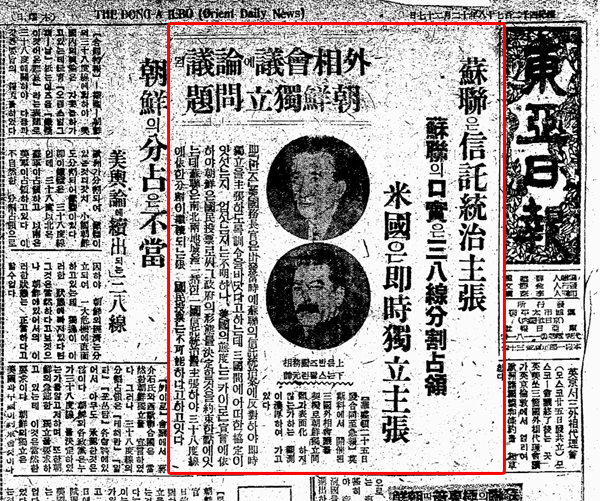
Moscow Conference sets stage for Korean trusteeship, division, and war.
North Korea
Political
4 min read
Updated By: History Editorial Network (HEN)
Published:
Updated:
At the Moscow Conference, the Soviet Union agreed to a United States proposal for a trusteeship over Korea for up to five years. The conference convened shortly after World War II, a conflict that had significantly altered the global balance of power. The Korean Peninsula, which had been under Japanese rule, became a point of strategic interest for both the US and the Soviet Union.
During the conference, delegates from the US, the Soviet Union, the United Kingdom, and China discussed the future governance of Korea. The trusteeship agreement was intended to prepare Korea for self-governance and eventual independence. The involvement of the US and Soviet Union indicated respective interests in ensuring that Korea would remain within their spheres of influence.
The proposal for trusteeship reflected larger geopolitical strategies where both superpowers sought to extend their ideologies — capitalism and communism. The agreement was significant, as it set a precedent for external influence on the Korean Peninsula, and eventually contributed to the division of Korea into two separate entities, North Korea and South Korea.
This trusteeship period was a vital prelude to the Korean War, which erupted as a consequence of growing tensions between the newly formed governments in the North and South, each backed by the Soviet Union and the United States respectively. The decision at the Moscow Conference thus played a critical role in shaping the future trajectory of not only Korea but the broader Cold War dynamics.
#MoscowConference #USSR #Trusteeship #Korea #ColdWar #Geopolitics #NorthKorea #MoofLife
Primary Reference
Historical Documents - Office of the Historian
Explore the Life Moments of
 AI Twin