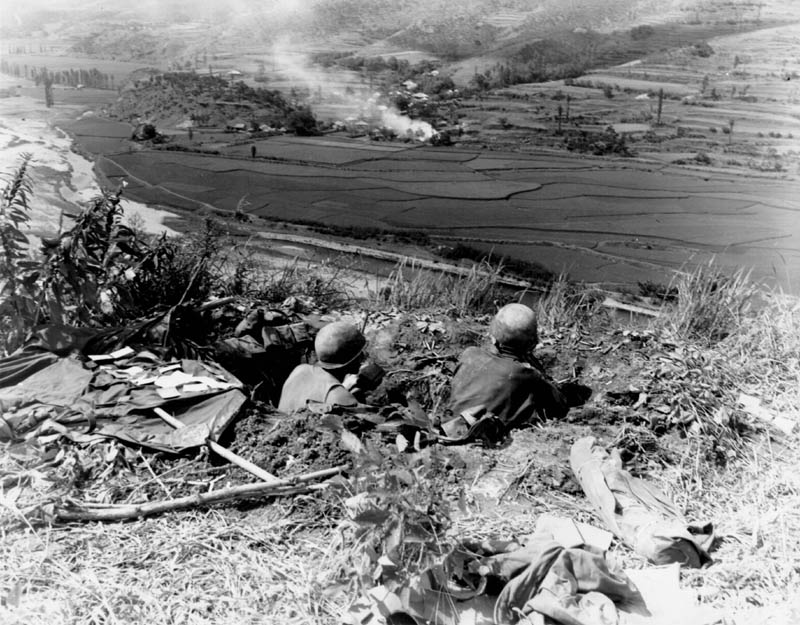
UN forces establish Pusan Perimeter, setting stage for counteroffensive and victory.
North Korea
Political
Military
4 min read
Updated By: History Editorial Network (HEN)
Published:
Updated:
Following the invasion of South Korea by North Korean forces, the United Nations, led by the United States, decided to intervene. As the North Korean People's Army advanced southward, UN forces were compelled to retreat to the Pusan Perimeter in southeast South Korea. This area served as the final strong defensive position for the UN and South Korean troops.
The Pusan Perimeter, a 140-mile long defensive line, became a sanctuary for resistance. By concentrating their defenses here, UN forces were able to receive reinforcements and supplies through the port of Pusan. This logistical capability was crucial for the continued support and buildup of military forces.
The decision to retreat and defend the Pusan Perimeter involved strategic considerations aimed not only at halting the advance of North Korean troops but also at buying time for UN forces to organize and plan a counteroffensive. This was one of the largest combat operations involving US ground forces since World War II up to that point.
Despite the retreat being a defensive measure, it was effective. UN forces, under General Douglas MacArthur's leadership, managed to regroup and establish a solid line of defense. The importance of the Pusan Perimeter laid the groundwork for future operations, including the Inchon Landing, which would turn the tide in favor of the UN forces.
The battle at the Pusan Perimeter showcased the determination and strategic planning of UN forces against a well-coordinated North Korean offensive. It played a critical role in the dynamic and often unpredictable nature of military engagements on the Korean Peninsula.
#MoofLife #UNForces #PusanPerimeter #KoreanConflict #USMilitary #StrategicDefense
Primary Reference
So Power Can Be Brought into Play: and the Pusan Perimeter
Explore the Life Moments of
 AI Twin