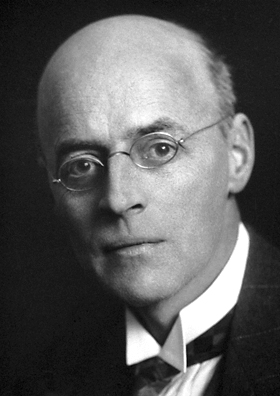
Owen Richardson's Nobel Prize-winning research revolutionized electronics with thermionic emission.
Sweden
Science
Technology
4 min read
Updated By: History Editorial Network (HEN)
Published:
Owen Willans Richardson, a British physicist, was recognized for his groundbreaking work on the thermionic phenomenon with the awarding of the Nobel Prize in Physics. Thermionic emission, the release of electrons from a heated material, was a critical area of study during that period, contributing significantly to the understanding of electron behavior and the development of various electronic devices. Richardson's law, also known as the Richardson-Dushman equation, mathematically describes thermionic emission, emphasizing the direct relationship between temperature and electron emission rates.
Richardson's contributions built the foundation for advancements in electronics, particularly in the development of vacuum tubes, which were pivotal in early radio, television technology, and computing. These advancements laid the groundwork for the electronic and digital age, impacting both scientific research and practical applications. By elucidating the principles of electrons emitting from heated surfaces, Richardson's work enhanced the functionality and efficiency of electronic devices, benefiting both industry and research.
The methodical application of Richardson's law facilitated the design of more reliable and effective electronic circuits. As a result, his work not only had immediate technical ramifications but also spurred further scientific inquiries in fields such as quantum mechanics and solid-state physics. This award reflected the transformative impact of his scientific contributions on both theoretical understanding and technological innovation.
#NobelPrize #Physics #Thermionics #ElectronEmission #ScientificAdvancement #Technology #Electronics #QuantumMechanics #MoofLife
Primary Reference
Owen Willans Richardson - Wikipedia
Explore the Life Moments of
 AI Twin