Nobel Winners Victor F. Hess and Carl D. Anderson Revolutionize Particle Physics
Sweden
Science
4 min read
Updated By: History Editorial Network (HEN)
Published:
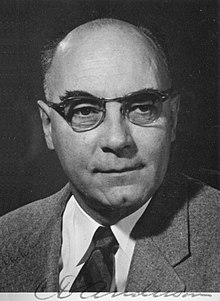
Victor F. Hess and Carl D. Anderson were recognized at the Nobel Prize in Physics awards ceremony for pioneering discoveries that greatly advanced the field of particle physics. Victor F. Hess was acknowledged for his discovery of cosmic radiation, revealing high-energy particles from outer space that incessantly bombard Earth’s atmosphere. His systematic balloon experiments, conducted at varying altitudes, provided concrete evidence of ionizing radiation levels increasing with altitude, leading to the then-revolutionary conclusion of the extraterrestrial origin of these particles.
Carl D. Anderson received acclaim for discovering the positron, the antiparticle of the electron, through examination of cloud chamber photographs of cosmic rays. This discovery confirmed the existence of antimatter, a theoretical prediction by physicist Paul Dirac. Anderson’s work not only validated theoretical physics but also opened new avenues for research in quantum mechanics and particle interactions, bridging gaps between theory and experimentation.
The recognitions signified a transformative shift in physics, embedding the importance of cosmic radiation studies and particle discovery in the broader scientific discourse. These findings spurred developments in high-energy physics, contributing to our understanding of both fundamental particles and the origins of cosmic rays.
The impact of these discoveries extended beyond academia, eventually influencing technologies in medical imaging, nuclear physics, and contributing to space exploration and our comprehension of the universe’s fundamental structure.
#CosmicRadiation #Antimatter #NobelPrizePhysics #ParticlePhysics #MoofLife
Primary Reference
Nobel Prize in Physics 1936 - Presentation Speech - NobelPrize.org
Explore the Life Moments of
 AI Twin