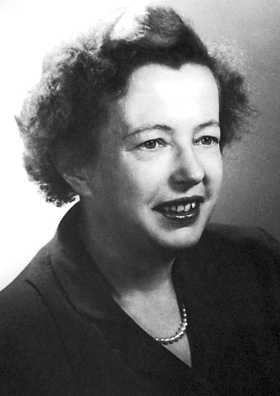
Nobel Prize-winning contributions to atomic nucleus and particle theory revolutionized understanding of nuclear physics.
Sweden
Science
3 min read
Updated By: History Editorial Network (HEN)
Published:
Eugene Wigner, Maria Goeppert Mayer, and J. Hans D. Jensen received the Nobel Prize in Physics for their groundbreaking contributions to atomic nucleus and particle theory. Specifically, Wigner was recognized for his work on the principles of symmetry in atomic nuclei, a crucial development for understanding the fundamental properties of particles and interactions. His work has had implications for both theoretical and experimental physics, enhancing the knowledge about the forces holding atomic nuclei together.
Maria Goeppert Mayer and J. Hans D. Jensen were honored for their collaborative research on the nuclear shell model. This model explains how protons and neutrons are arranged in shells within the nucleus, analogous to the arrangement of electrons in an atom. Their discoveries provided insights into the stability of different elements and isotopes, and played a vital role in the broader understanding of nuclear reactions and processes.
Their collective work has significantly influenced the fields of nuclear physics and quantum mechanics. It paved the way for subsequent research in particle physics, influencing how scientists understand atomic structures and the interactions governing them.
#NobelPhysics #GoeppertMayer #EugeneWigner #HansJensen #NuclearPhysics #QuantumMechanics #ScientificImpact #MoofLife
Primary Reference
Portal:Nuclear technology/Biographies - Wikipedia
Explore the Life Moments of
 AI Twin