
Nobel Laureates' DMP Model Revolutionizes Labor Market Theory and Policy
Sweden
Science
Economic Downturn
4 min read
Updated By: History Editorial Network (HEN)
Published:
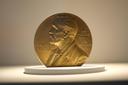
Peter A. Diamond, Dale T. Mortensen, and Christopher A. Pissarides were awarded the Nobel Prize in Economic Sciences jointly for their contributions to the understanding of markets characterized by search frictions. Their work provided a theoretical framework for analyzing how unemployment, job vacancies, and labor market policies interact.
Peter Diamond developed the foundations of search theory, which studies how search activities influence the dynamics of markets. Dale Mortensen expanded these theories by incorporating the time it takes for workers to find suitable job openings, and Christopher Pissarides integrated this with macroeconomic modeling to explain the fluctuations in employment and economic activity.
Their combined efforts resulted in the development of the Diamond-Mortensen-Pissarides (DMP) model. This model is now widely used in labor economics to examine the processes and outcomes in labor markets. It has significantly influenced how policymakers consider unemployment benefits, regulation of wages, and job creation strategies.
The practical applications of their theories are visible in various policy decisions intended to reduce unemployment and improve job matching processes. These might include government intervention in job training programs, unemployment insurance, and the design of labor market regulations that affect the ease with which workers can transition between jobs.
By providing a deeper understanding of the labor market, their work has helped shape policies aimed at enhancing job market efficiency and reducing unemployment. This contribution is vital as labor markets are integral to the functioning of the economy.
#NobelPrize #EconomicSciences #LaborMarket #SearchTheory #Unemployment #MoofLife
Primary Reference
MARKETS WITH SEARCH FRICTIONS
Explore the Life Moments of
 AI Twin