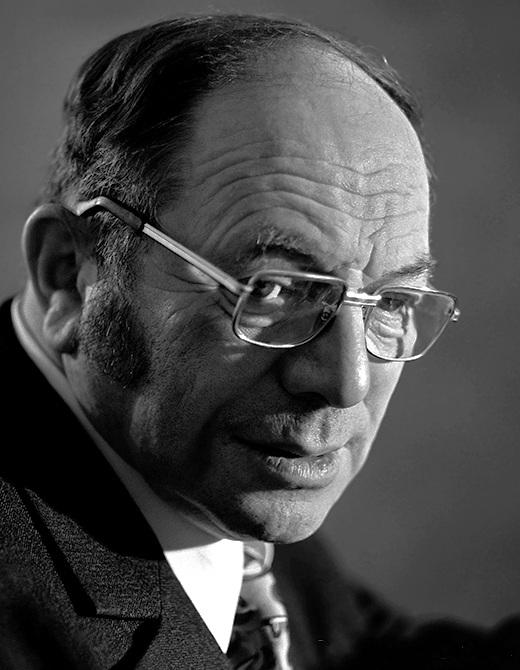
Nobel Prize recognizes pioneering work in economic resource allocation.
Sweden
Economic
Science
5 min read
Updated By: History Editorial Network (HEN)
Published:
Leonid Vitaliyevich Kantorovich and Tjalling C. Koopmans were awarded the Nobel Prize in Economic Sciences for their pioneering work in the theory of optimum allocation of resources. Their contributions provided a mathematical framework for analyzing how resources can be most efficiently distributed, an essential aspect of economic theory and practice.
Kantorovich, a Soviet mathematician and economist, introduced linear programming, a method to achieve the best outcome in a mathematical model whose requirements are represented by linear relationships. This approach proved fundamental in solving numerous economic problems, such as the allocation of resources in industries and the optimization of production processes.
On the other hand, Dutch-American economist Koopmans made significant advances in the field of activity analysis, a technique used in economic planning and assessing production efficiency. His work on the theory of economic growth and resource allocation focused on how different agents in an economy interact and make decisions that lead to the overall efficient use of resources.
Their joint recognition by the Nobel committee underscored the importance of these mathematical methods in enhancing the understanding of economic efficiencies. This award highlighted the intersection of economics and mathematics, providing valuable tools that have profoundly influenced operations research, logistics, and the formulation of economic policies.
Kantorovich and Koopmans' contributions have had lasting impacts on various industries and sectors around the world. Linear programming and activity analysis are now standard techniques in economics and have applications beyond traditional economic problems, including in engineering, military strategy, and financial planning.
The recognition of Kantorovich and Koopmans emphasized the critical role of quantitative methods in economics, promoting the development of new models and approaches in optimizing resource use. This prize cemented their legacies as key figures whose work bridged theoretical and applied economics, leading to practical solutions for complex economic challenges.
#OptimumResourceAllocation #EconomicSciences #NobelPrize #LinearProgramming #ActivityAnalysis #Kantorovich #Koopmans #EconomicTheory #MoofLife
Primary Reference
Tjalling C. Koopmans – Biographical - NobelPrize.org
Explore the Life Moments of
 AI Twin