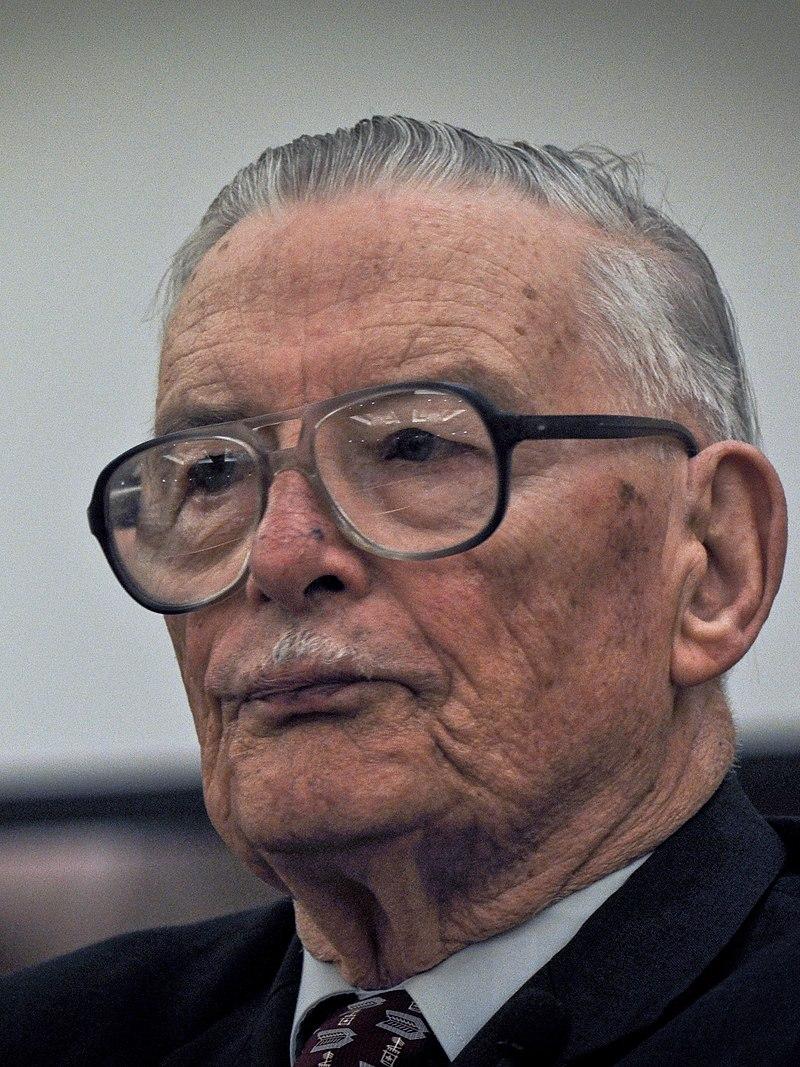
James Buchanan Jr. Nobel Prize-winning work on economics, politics, public choice theory, and governance.
Sweden
Economic
Political
3 min read
Updated By: History Editorial Network (HEN)
Published:
James M. Buchanan Jr. received the Nobel Prize in Economic Sciences for his work on the contractual and constitutional bases for economic and political decision-making. Buchanan's research significantly contributed to the public choice theory, which examines how economic theories and methods apply to political science, focusing on the incentives and behavior of voters, politicians, and bureaucrats.
Buchanan's analysis introduced the concept that economic and political decision-making processes are guided by the same principles and motivations. He emphasized the importance of rules and institutions in shaping outcomes and argued that constitutions should be designed to protect individual rights and restrain government power.
His work highlighted how political decisions often reflect the self-interest of decision-makers rather than the public good. Buchanan's theories have been influential in understanding the dynamics within democratic systems and the interaction between economic policies and political structures.
This recognition underscored the interdisciplinary nature of his contributions, blending economics and political science to provide a richer understanding of governance and policy-making. Buchanan's ideas have been widely cited and discussed, prompting further scholarship and debate within the fields of economics and political science.
#MoofLife #NobelPrize #EconomicScience #PublicChoiceTheory #PoliticalEconomics #JamesMBuchanan
Primary Reference
The Prize in Economics 1986 - Press release - NobelPrize.org
Explore the Life Moments of
 AI Twin