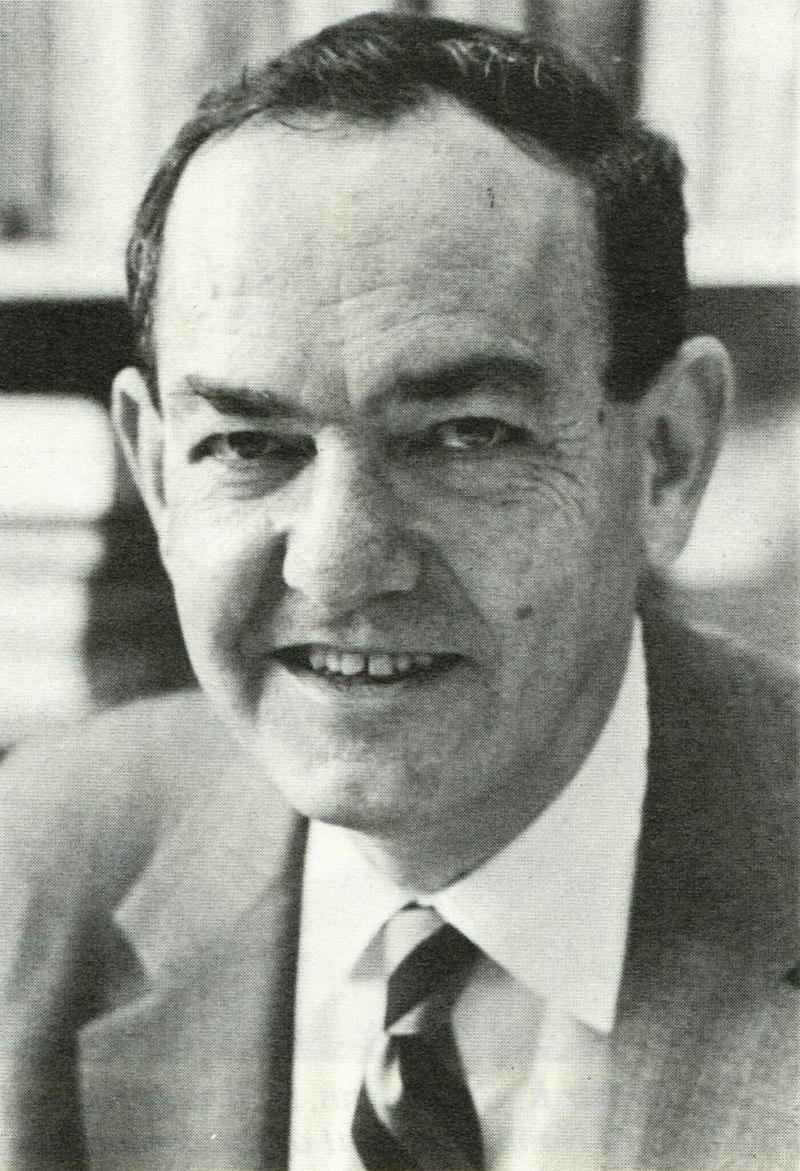
Herbert A. Simon: Pioneer of Decision-Making in Economics and Organizations.
Sweden
Science
Economic Downturn
4 min read
Updated By: History Editorial Network (HEN)
Published:
Herbert A. Simon was awarded the Nobel Prize in Economic Sciences for his pioneering research into the decision-making process within economic organizations. Simon's work laid the foundation for understanding how individuals and organizations process information and make decisions. His contributions to the fields of economics, psychology, and computer science were profound, including the development of the theory of bounded rationality. This theory proposed that while individuals strive to make rational choices, their cognitive limitations often result in satisficing—seeking a satisfactory solution rather than an optimal one.
Simon also introduced the concept of artificial intelligence in decision-making processes. His research emphasized the importance of heuristic methods in problem-solving, which are rules of thumb that guide decision-making in complex situations. Simon’s interdisciplinary approach brought together various strands of knowledge, which gradually influenced public policy, business strategy, and economic theory.
The impact of his research has been widespread, touching upon areas such as management science, administrative behavior, and the study of human problem-solving. By integrating insights from psychology into economic theory, Simon challenged traditional economic models that assumed individuals have perfect information and unlimited cognitive capabilities.
Simon’s work remains highly relevant, influencing contemporary studies in behavioral economics and cognitive psychology. His legacy is reflected in the continuous exploration and integration of human cognitive limitations into economic theories and models.
#HerbertASimon #NobelPrize #EconomicSciences #DecisionMaking #BoundedRationality #ArtificialIntelligence #BehavioralEconomics #MoofLife
Primary Reference
The Sveriges Riksbank Prize in Economic Sciences in Memory of ...
Explore the Life Moments of
 AI Twin