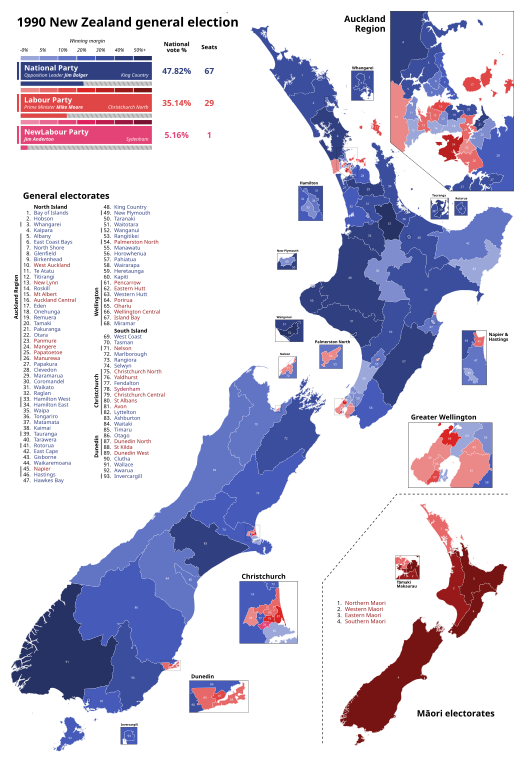
National Party wins big, Jim Bolger Prime Minister.
New Zealand
Political
Economic Downturn
4 min read
Updated By: History Editorial Network (HEN)
Published:
Updated:
During the general election, the National Party achieved a sweeping victory leading to Jim Bolger becoming the 35th Prime Minister of New Zealand. The election was a significant turning point in the country's political landscape as the National Party secured a large majority in Parliament.
In the lead-up to the election, the country faced economic challenges, including high unemployment rates and a struggling agricultural sector. The Labour government, led by Geoffrey Palmer, was criticized for its handling of these issues, which ultimately influenced voter sentiment.
The National Party, under the leadership of Jim Bolger, campaigned on promises of economic reform and job creation. Bolger's emphasis on restoring confidence in the economy resonated with voters, leading to a decisive victory for the party.
As the results of the election rolled in, it became evident that the National Party had secured a landslide victory, winning a significant number of seats in Parliament. Jim Bolger's appointment as Prime Minister marked a new era of governance in New Zealand, with a focus on revitalizing the economy and addressing social challenges.
The National Party's victory and Jim Bolger's ascension to the role of Prime Minister had far-reaching implications for the country. Bolger's government implemented various economic reforms and policies aimed at stimulating growth and creating employment opportunities. Additionally, his leadership style and approach to governance left a lasting impact on New Zealand's political landscape.
Overall, the general election that saw the National Party achieve a landslide victory and Jim Bolger become the 35th Prime Minister of New Zealand was a pivotal moment in the country's history, shaping its path forward for years to come.
#NewZealandPolitics #EconomicReform #JimBolger
Explore the Life Moments of
 AI Twin