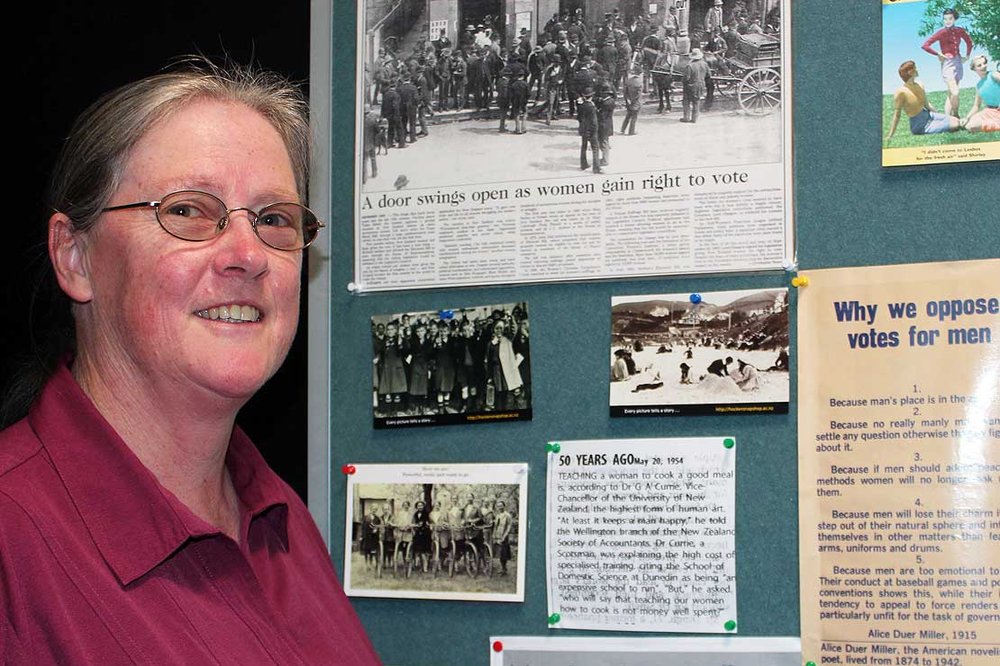
Women gain eligibility for parliamentary elections.
New Zealand
'/%3e%3cuse xlink:href='%23a' transform='rotate(72 0 0)'/%3e%3cuse xlink:href='%23a' transform='rotate(-72 0 0)'/%3e%3cuse xlink:href='%23a' transform='scale(-1 1) rotate(72)'/%3e%3c/g%3e%3c/defs%3e%3cpath fill='%23012169' d='M0 0h1200v600H0z'/%3e%3cpath stroke='%23FFF' stroke-width='60' d='m0 0 600 300M0 300 600 0' clip-path='url(%23b)'/%3e%3cpath stroke='%23C8102E' stroke-width='40' d='m0 0 600 300M0 300 600 0' clip-path='url(%23c)'/%3e%3cpath stroke='%23FFF' stroke-width='100' d='M300 0v300M0 150h600' clip-path='url(%23b)'/%3e%3cpath stroke='%23C8102E' stroke-width='60' d='M300 0v300M0 150h600' clip-path='url(%23b)'/%3e%3cuse xlink:href='%23d' fill='%23FFF' transform='matrix(45.4 0 0 45.4 900 120)'/%3e%3cuse xlink:href='%23d' fill='%23C8102E' transform='matrix(30 0 0 30 900 120)'/%3e%3cg transform='rotate(82 900 240)'%3e%3cuse xlink:href='%23d' fill='%23FFF' transform='rotate(-82 519.022 -457.666) scale(40.4)'/%3e%3cuse xlink:href='%23d' fill='%23C8102E' transform='rotate(-82 519.022 -457.666) scale(25)'/%3e%3c/g%3e%3cg transform='rotate(82 900 240)'%3e%3cuse xlink:href='%23d' fill='%23FFF' transform='rotate(-82 668.57 -327.666) scale(45.4)'/%3e%3cuse xlink:href='%23d' fill='%23C8102E' transform='rotate(-82 668.57 -327.666) scale(30)'/%3e%3c/g%3e%3cuse xlink:href='%23d' fill='%23FFF' transform='matrix(50.4 0 0 50.4 900 480)'/%3e%3cuse xlink:href='%23d' fill='%23C8102E' transform='matrix(35 0 0 35 900 480)'/%3e%3c/svg%3e)
Political
WomenEmpowerment
4 min read
Updated By: History Editorial Network (HEN)
Published:
Updated:
In 1919, a pivotal event took place in New Zealand, where women became eligible for election to Parliament. This milestone was the result of tireless advocacy by suffragists who fought long and hard for gender equality. New Zealand had already made history in 1893 by granting women the right to vote, making it the first self-governing country to do so.
The decision to allow women to stand for election to Parliament opened up new opportunities for women to participate in the country's political landscape. It marked a significant step towards achieving gender parity and women's empowerment in the realm of governmental decision-making.
The impact of this event was profound, as it paved the way for women to have a greater voice and representation in shaping the laws and policies that governed their lives. Women were now able to directly contribute to the legislative process and advocate for issues that were important to them and their communities.
This development was a critical moment in New Zealand's history, demonstrating the country's commitment to inclusivity and equal rights for all its citizens. It set a precedent for other nations to follow, inspiring progress towards gender equality on a global scale.
Overall, the event where women became eligible for election to Parliament in New Zealand in 1919 was a significant turning point in the country's history. It symbolized a shift towards greater gender equality and representation in politics, highlighting the ongoing fight for women's rights and empowerment.
#NewZealand #WomenEmpowerment #GenderEquality #PoliticalInclusion
#Women
Primary Reference
Women’s right to enter Parliament - 100 years ago
Explore the Life Moments of
 AI Twin