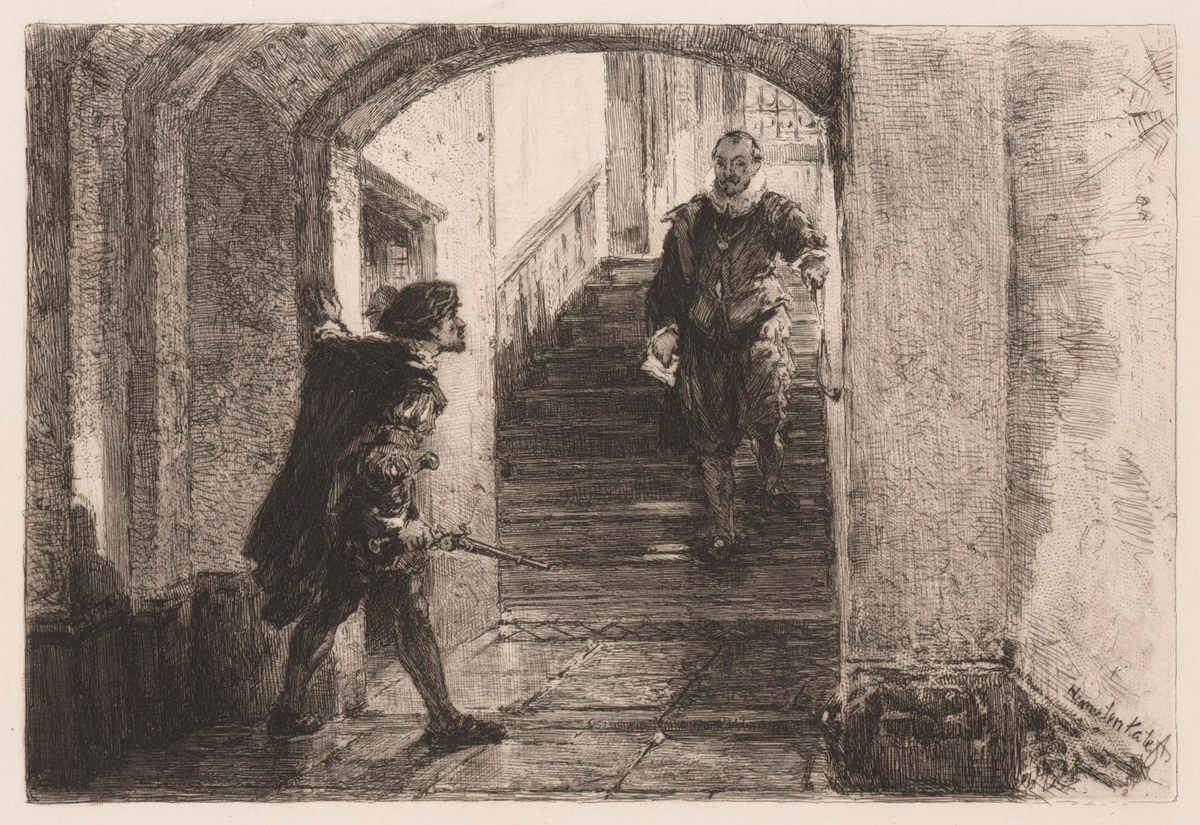
Assassination of William the Silent
Netherlands

Political
4 min read
Updated By: History Editorial Network (HEN)
Published:
William the Silent, Prince of Orange, a prominent leader in the Dutch Revolt against Spanish rule, was assassinated in Delft. The assassination was carried out by Balthasar Gérard, a French supporter of the Spanish Crown. William's death was a severe blow to the Dutch independence movement, as he was a unifying figure and a key strategist.
Born into a noble family, William became a steadfast advocate for Dutch autonomy, leading the resistance against Spanish oppression. His assassination left a power vacuum within the Dutch Revolt, leading to a period of uncertainty and internal strife among the rebellious provinces.
The impact of William's assassination was profound, as it galvanized the Dutch resolve to continue the fight for independence. Despite his death, his legacy inspired the Dutch to persevere and eventually achieve independence from Spanish rule. The assassination of William the Silent was a turning point in the Dutch Revolt, solidifying the determination of the Dutch people to establish a free and sovereign nation.
The aftermath of William's assassination led to increased support for the Dutch cause from other European powers, including England and France. The Dutch Republic emerged as a significant maritime and economic power in the following centuries, in part due to the foundation laid by William the Silent and his sacrifice for Dutch independence.
The assassination of William the Silent symbolizes the sacrifices made by individuals in the pursuit of freedom and self-determination. His legacy continues to inspire generations of Dutch people to uphold the principles of liberty and democracy that he fought for.
#DutchRevolt #Independence #Assassination #Legacy
Primary Reference
William the Silent - Wikipedia

Explore the Life Moments of
 AI Twin