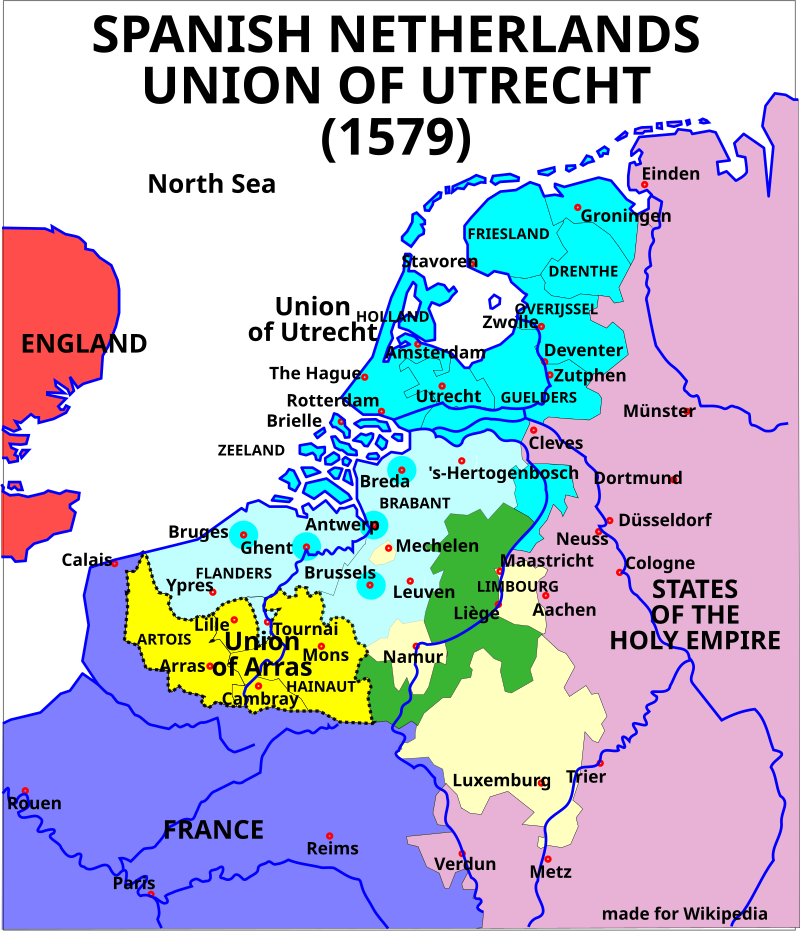
Formation of United Provinces: Union of Utrecht Creates Dutch Republic
Netherlands

Political
4 min read
Updated By: History Editorial Network (HEN)
Published:
In the late 16th century, the Union of Utrecht was signed in the Netherlands by Dutch provinces seeking to establish a unified front against Spanish rule. The agreement resulted in the formation of the United Provinces of the Netherlands, marking the beginning of the Dutch Republic.
The Union of Utrecht was a response to the oppressive rule of King Philip II of Spain, who sought to impose Catholicism on the Protestant Dutch provinces. The document outlined the mutual defense and support of the signatory provinces, creating a strong alliance against the Spanish forces.
This historic event had a significant impact on the Netherlands, as it laid the foundation for the Dutch Republic's independence and sovereignty. The United Provinces of the Netherlands emerged as a major power in Europe, with a strong economy and a formidable navy that challenged traditional powers in the region.
The Union of Utrecht also paved the way for the Dutch Golden Age, a period of great economic prosperity, cultural flourishing, and scientific advancement in the 17th century. The Dutch Republic became known for its tolerance, trade dominance, and innovative spirit, attracting skilled workers, merchants, and artists from across Europe.
Overall, the signing of the Union of Utrecht was a pivotal moment in Dutch history, symbolizing the resilience and determination of the Dutch people to fight for their freedom and establish a new republic based on principles of unity, tolerance, and prosperity.
#Netherlands #DutchRepublic #UnionofUtrecht #Independence #GoldenAge
Primary Reference
Dutch Republic - Wikipedia
Explore the Life Moments of
 AI Twin