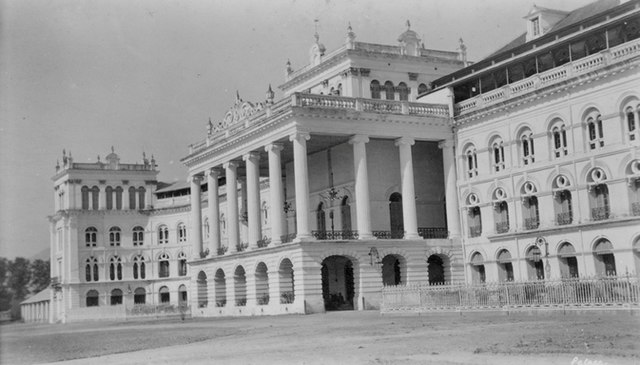
The Narayanhiti Royal Palace: A Historical Overview.
Nepal

Landmarks
Modernization Effort
5 min read
Updated By: History Editorial Network (HEN)
Published:
The establishment of the Narayanhiti Royal Palace marked a pivotal change in Nepal's monarchical history. Situated in the heart of Kathmandu, the palace was intended to symbolize both the political and cultural transformation of the country. It replaced an older structure that had served the Shah monarchy for generations. This new edifice was built on a site of historical significance, integrating traditional Nepalese architectural styles with modern amenities to project a vision of progress and continuity.
The construction of the new palace was commissioned during the reign of King Mahendra, reflecting his broader agenda to modernize Nepal in various sectors, including infrastructure and governance. The design, conceptualized by American architect Benjamin Polk, incorporated Nepalese aesthetics with contemporary standards, making it an embodiment of Nepal’s aspirations to balance tradition with modernity.
Strategically located at the foothills of the Kathmandu Valley, the Narayanhiti Royal Palace became the administrative and ceremonial hub of the monarchy. It housed the official residence of the King and played host to numerous state functions, diplomatic events, and cultural programs. The palace grounds included extensive gardens, and its Durbar Hall was often the venue for significant national decisions and declarations.
Historically, the palace also became a focal point during times of political upheaval. As the center of royal power, it witnessed significant events that shaped the trajectory of Nepal’s monarchy and political landscape. It became a symbol of both royal grandeur and the intense pressures that come with sovereign rule.
The creation of the palace had broader socio-economic implications. It drew artisans, builders, and labor from various parts of Nepal, thus promoting employment and skill development in sectors related to construction and design. The palace’s establishment also spurred infrastructural improvements in Kathmandu, including enhanced road connectivity and improved civic facilities.
The Narayanhiti Royal Palace remained the royal residence until Nepal abolished its monarchy and transitioned into a federal democratic republic. The building was then converted into a museum, preserving a critical chapter in Nepal’s history for future generations to study and reflect upon.
#NepalMonarchy #HistoricalLandmarks #NarayanhitiPalace #KathmanduHistory #ModernizationEffort #MoofLife
Primary Reference
Narayanhiti Palace - Wikipedia

Explore the Life Moments of
 AI Twin