Sepoy Rebellion and Nepal's Support in North India
Nepal

Military
5 min read
Updated By: History Editorial Network (HEN)
Published:
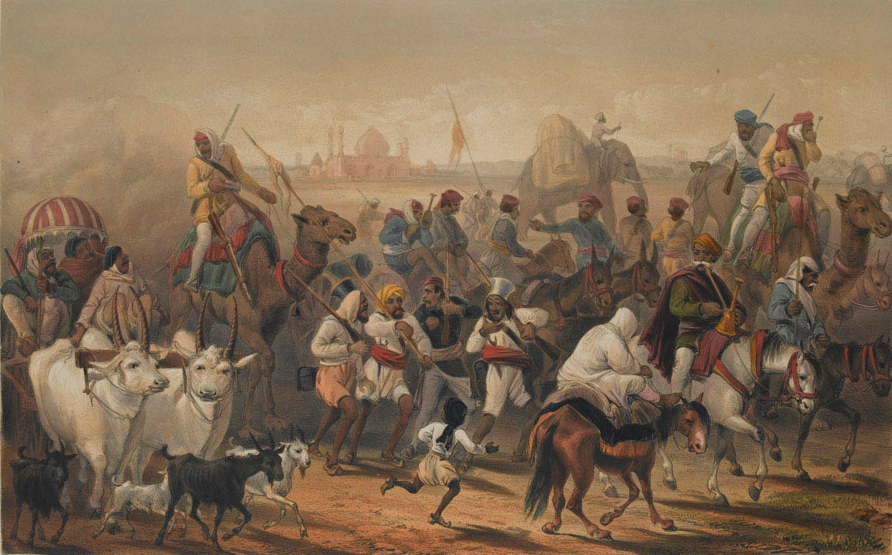
The Sepoy Rebellion, also referred to as the Indian Mutiny, marked a critical period in the Indian subcontinent's history when Indian soldiers, employed by the British East India Company, initiated an uprising in northern India. The discontent among the sepoys stemmed from various factors, including widespread dissatisfaction over pay disparities, lack of promotional opportunities, and the introduction of new rifle cartridges thought to be greased with animal fat, offending both Hindu and Muslim religious sensitivities.
The rebellion escalated rapidly, with significant areas in northern India, such as Delhi, Kanpur, and Lucknow, becoming epicenters of violent conflicts. Major civilian turmoil ensued as rebels attacked British civilians and loyalists. The British forces found themselves initially caught off-guard and struggled to reassert control. Crucially, support came from neighboring Nepal, whose Gurkha troops were instrumental in aiding the British campaign to suppress the mutiny. This assistance was a significant factor in the eventual recapture of Delhi by British and loyalist forces.
The impact of the rebellion was profound. The conflict led to significant casualties on both sides and massive destruction of property. The British response was unyielding, with widespread executions and reprisal killings. This event also marked the end of the British East India Company's rule, leading to significant administrative changes, including the transfer of power to the British Crown, the inception of the British Raj, and the introduction of direct governance under Queen Victoria. Social, economic, and political structures in India were deeply influenced, shaping the future trajectory of the region.
Statistically, it is estimated that tens of thousands of Indians and thousands of British and loyalist soldiers lost their lives during the conflict. The aftermath saw increased mistrust between British authorities and the Indian populace, leading to more rigorous control measures and alterations in the recruitment policies concerning Indian soldiers.
This moment in history represents a complex intersection of colonial power dynamics, military insurrection, and geopolitical alliances, highlighting Nepal's strategic involvement during the rebellion period and its aftermath.
#MoofLife #History #ColonialIndia #SepoyMutiny #BritishRaj #NepalAssistance #MilitaryHistory #IndiaRebellion
Primary Reference
Bangladesh Study_1

Explore the Life Moments of
 AI Twin