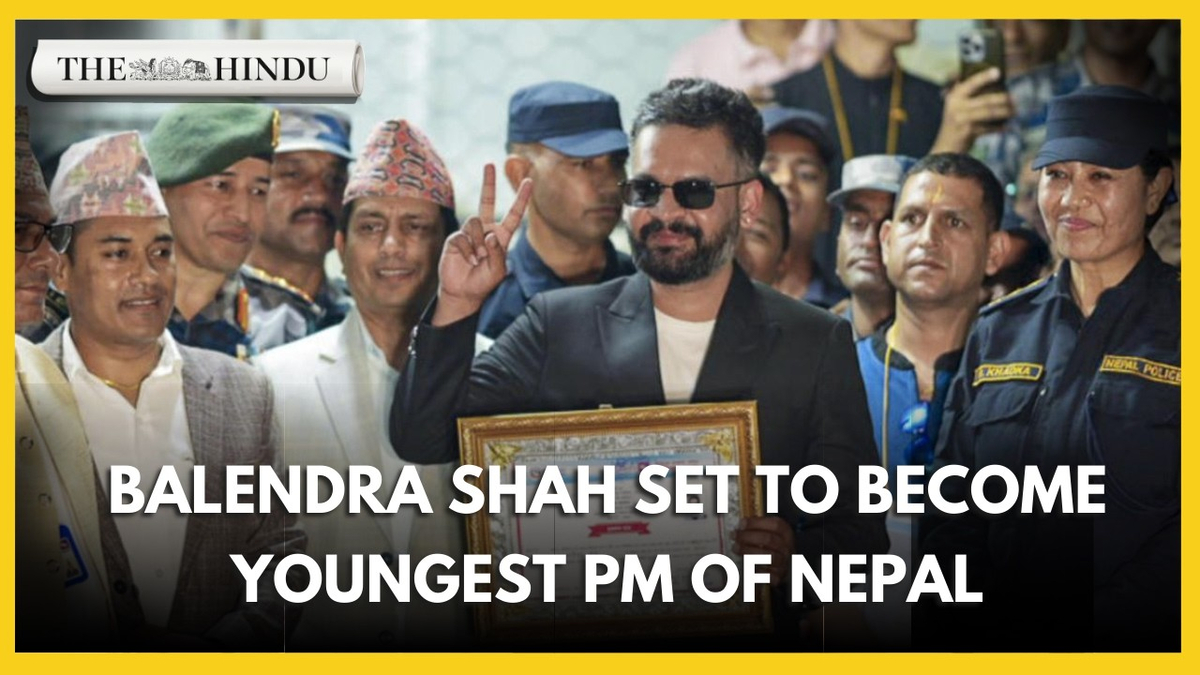
RSP’s Nepal election landslide puts Balendra “Balen” Shah on course for power
Nepal
 scale(5.56106)'%3e%3ccircle r='1'/%3e%3cg id='d'%3e%3cg id='c'%3e%3cpath id='b' d='M.195-.98 0-1.39l-.195.408' transform='rotate(11.25)'/%3e%3cuse xlink:href='%23b' transform='rotate(22.5)'/%3e%3cuse xlink:href='%23b' transform='rotate(45)'/%3e%3c/g%3e%3cuse xlink:href='%23c' transform='rotate(67.5)'/%3e%3c/g%3e%3cuse xlink:href='%23d' transform='scale(-1 1)'/%3e%3c/g%3e%3cg transform='translate(0 58.787) scale(8.1434)'%3e%3ccircle r='1'/%3e%3cg id='g'%3e%3cg id='f'%3e%3cpath id='e' d='M.259.966 0 1.576l-.259-.61'/%3e%3cuse xlink:href='%23e' transform='rotate(180)'/%3e%3c/g%3e%3cuse xlink:href='%23f' transform='rotate(90)'/%3e%3c/g%3e%3cuse xlink:href='%23g' transform='rotate(30)'/%3e%3cuse xlink:href='%23g' transform='rotate(60)'/%3e%3c/g%3e%3c/g%3e%3c/svg%3e)
Political
3 min read
Updated By: History Editorial Network (HEN)
Published:
Nepal’s 05/03/2026 general election delivered a decisive parliamentary win for the Rastriya Swatantra Party, placing former Kathmandu mayor Balendra “Balen” Shah at the center of government formation after the first national vote since the youth-led protests of September 2025. Final results reported on 12/03/2026 showed the RSP winning 182 of 275 seats in the House of Representatives, including 125 direct seats and 57 proportional seats, while the Nepali Congress took 38 and CPN (UML) won 25. The scale of the result broke the long-running dominance of Nepal’s traditional parties and left the RSP just two seats short of a two-thirds majority.
At 35, Shah is expected to become Nepal’s youngest prime minister once the new parliament completes the formal process of choosing a government. Reuters reported that he is also expected to be the country’s first prime minister from the Madhesh region. The election followed months of political upheaval after anti-government protests in 2025, which Reuters said led to 77 deaths and the fall of the previous government. Shah’s rise was reinforced by his victory over former prime minister K.P. Sharma Oli in Jhapa-5, where Nepal media reported Shah received 68,348 votes to Oli’s 18,734. On 09/03/2026, Indian Prime Minister Narendra Modi publicly congratulated RSP chairman Rabi Lamichhane and Shah on the party’s success.
#NepalElection
#BalenShah
#RSP
#NepalPolitics
#Jhapa5

Explore the Life Moments of
 AI Twin