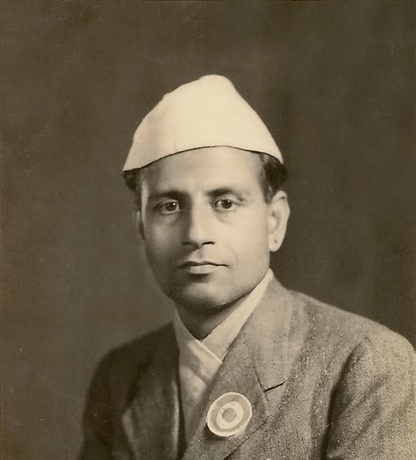
Matrika Prasad Koirala Elected as Prime Minister
Nepal
Political
6 min read
Updated By: History Editorial Network (HEN)
Published:
Matrika Prasad Koirala, a figure rooted in Nepalese politics, marked a pivotal point in the history of Nepal by becoming the first commoner elected as the Prime Minister. Emerging from the ranks of a citizenry historically overshadowed by royalty and aristocracy, Koirala's election signaled a shift towards a more inclusive political landscape.
Before ascending to this role, Koirala was deeply involved in the quest for democracy in Nepal. His political career was defined by his commitment to the rights and representation of the common people, contrasted with the autocratic rule of the Rana dynasty that had dominated Nepalese politics. The Rana regime, characterized by hereditary rule and limited public participation, faced increasing opposition from figures like Koirala, who advocated for democratic reforms.
Koirala's election followed the abdication of King Tribhuvan, who played a crucial role in overthrowing the Rana regime. The king's return to the throne, supported by the democratic movement, led to the establishment of a more representative government framework. Koirala's rise to prime ministership came at a time when the newly reinstated monarch and the political factions were seeking to shape a new governance model that involved more public participation.
The transition period was fraught with challenges. Koirala's government had to address issues such as political instability, economic restructuring, and integrating diverse political factions into a coherent administrative framework. Despite these challenges, Koirala's leadership was a step towards building a democratic Nepal, setting precedence for future leaders.
Statistically, the population of Nepal during this time was approximately 8.7 million. The economy was predominantly agrarian, with over 90% of the population engaged in agriculture. Educational development was still in its nascent stages, with literacy rates hovering around 5%. These statistics underscored the enormity of the task ahead for Koirala and his administration.
Subsequently, this leadership laid the foundation for Nepal's gradual transition into a democratic state. Koirala's tenure highlighted the potential for common citizens to participate actively in governance, challenging the long-standing political hegemony of the ruling elite.
The impact of Koirala's prime ministership resonates through Nepal's ongoing struggle for democratic governance, illustrating the critical role of inclusive leadership in political transformation.
#PoliticalShift #DemocracyInNepal #MatrikaPrasadKoirala #NepalesePolitics #MoofLife
Primary Reference
Matrika Prasad Koirala - Wikipedia

Explore the Life Moments of
 AI Twin