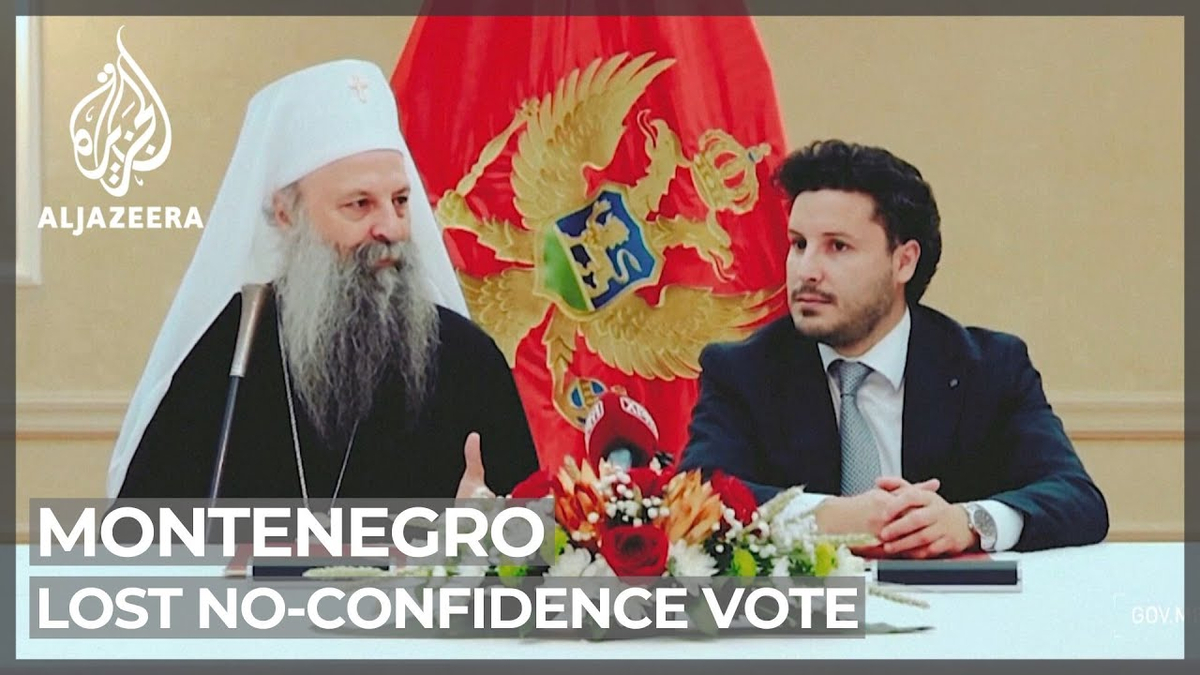
Montenegro's 2022 no-confidence vote: A pivotal moment in shifting political landscape
Montenegro
Political
European Integration
4 min read
Updated By: History Editorial Network (HEN)
Published:
Updated:
Following the 2020 elections in Montenegro, a new government was formed. This administration was notable for marking a shift in political power as it ended the long dominance of the Democratic Party of Socialists. However, the coalition that formed the government was seen as tenuous due to the broad spectrum of political ideologies it represented. Issues such as economic reforms, corruption, and alignment with European Union policies were focal points of their mandate but also sources of internal discord.
On February 1, 2022, the Montenegrin Parliament held a historic vote of no-confidence against the government. With a majority vote, the government was effectively dissolved. This marked Montenegro’s first successful no-confidence vote, indicating a significant moment in the country's political landscape and demonstrating a functioning parliamentary system capable of checks and balances.
The implications were substantial; the vote paved the way for a transitional government and highlighted the instability prevalent within the ruling coalition. It also underscored public dissatisfaction and the political parties’ failure to deliver on key promises, such as addressing corruption and improving economic conditions. Political analysts noted the vote as a reflection of deeper systemic issues within Montenegrin politics.
This no-confidence vote resonated through Montenegro’s path towards further integration with European structures, affecting international relations and posing questions about future governance stability. It also influenced public perceptions of political accountability and governance effectiveness.
#MontenegroPolitics #GovernmentChange #VoteOfNoConfidence #PoliticalAccountability #MoofLife

Explore the Life Moments of
 AI Twin