Montenegro's Semi-Autonomous Rule by Petrović-Njegoš Dynasty: Fortifying Governance and National Identity.
Montenegro
Political
4 min read
Updated By: History Editorial Network (HEN)
Published:
Updated:
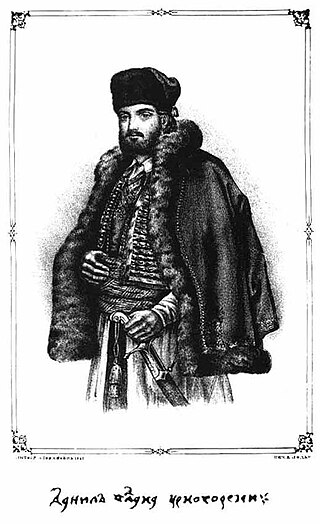
Montenegro gained semi-autonomy under the rule of the House of Petrović-Njegoš, establishing an important phase in its history. The consolidation of power by the Petrović-Njegoš dynasty began with Danilo I, who was appointed as the leader of the principality. This period marked the transition from ecclesiastical authority to a more hereditary rule, centered on the governing capabilities of the Petrović-Njegoš family.
This political shift arose from Montenegro's ongoing efforts to resist Ottoman domination. By securing semi-autonomy, Montenegro sought to strengthen its internal political structures and maintain cultural and religious identity amidst regional turbulence. Danilo I combined the roles of secular and spiritual leadership, which helped centralize power and fortify the governance system.
The Petrović-Njegoš rule also involved various socio-political strategies, including alliances with neighboring states and tactical military engagements. This ensured a stable and somewhat isolated domain that retained a degree of independence from external influences. Under this semi-autonomous arrangement, Montenegro was able to develop its own administrative, legal, and educational institutions, further establishing its distinctive national identity.
The influence of the Petrović-Njegoš family continued to shape Montenegrin society in the following decades, laying the groundwork for future development and resistance against external subjugation. This period was crucial in fortifying the state's defense mechanisms and fostering a sense of unity among its people.
#PetrovicNjegos #MontenegrinHistory #OttomanResistance #MoofLife

Explore the Life Moments of
 AI Twin