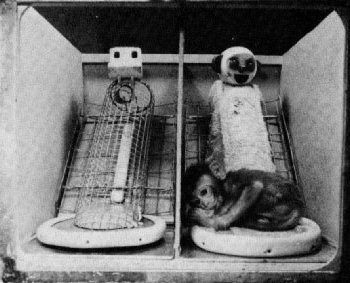
Harry Harlow publishes 'The Nature of Love'
Psychology
Animal Behavior
Attachment Theory
4 min read
Updated By: History Editorial Network (HEN)
Published:
Updated:
Harry Harlow's publication 'The Nature of Love' explores the critical role of attachment and love in the development of rhesus monkeys. Through a series of experiments, Harlow demonstrated that infant monkeys have a strong preference for a soft, comforting surrogate mother over a wire mother that provides food. This finding highlighted the importance of emotional bonds and comfort in the early stages of development, suggesting that love and attachment are fundamental to psychological well-being. Harlow's work challenged the prevailing behaviorist view that emphasized the role of reinforcement and conditioning in the formation of attachments. Instead, his research underscored the significance of emotional connections in the nurturing process, which has implications for understanding human relationships as well.
The impact of Harlow's research extends beyond the realm of animal studies; it has influenced various fields, including psychology, child development, and social work. His findings have been instrumental in shaping theories of attachment, particularly in understanding the effects of maternal deprivation and the importance of nurturing in early childhood. Harlow's work has also contributed to discussions about the nature of love and its implications for mental health, emphasizing that emotional support is crucial for healthy development. The insights gained from his studies have informed practices in parenting and caregiving, highlighting the need for emotional availability and responsiveness in fostering secure attachments.
#mooflife
#MomentOfLife
#HarryHarlow
#TheNatureOfLove
#AttachmentTheory
#RhesusMonkeys
#Psychology
Primary Reference
Harry Harlow

Explore the Life Moments of
 AI Twin