Asch Conformity Experiments
Psychology
Experiments
Social Behavior
4 min read
Updated By: History Editorial Network (HEN)
Published:
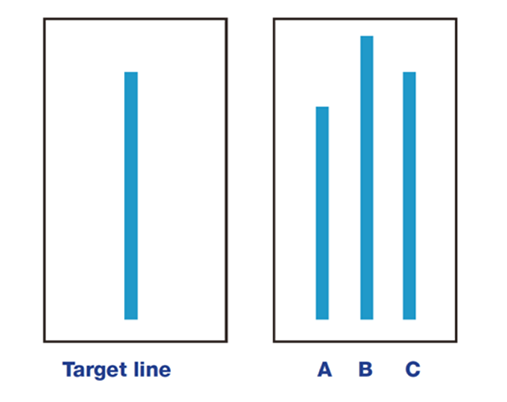
The exploration of conformity and conditioning in psychology has been significantly shaped by various experiments that reveal the influence of social dynamics on individual behavior. One of the foundational studies in this area is the Asch Conformity Experiments, which aimed to understand how group pressure can lead individuals to conform to incorrect answers in a simple task. In these experiments, participants were asked to match the length of a line to three comparison lines, while confederates provided unanimous but incorrect responses. The results showed that a substantial number of participants conformed to the group's incorrect answers, highlighting the powerful impact of social influence on decision-making. This phenomenon illustrates the tension between personal judgment and the desire for social acceptance, raising questions about the limits of individual autonomy in group settings.
Further investigation into conformity was conducted through the Stanford Prison Experiment, which examined the psychological effects of perceived power and authority within a simulated prison environment. Participants were assigned roles as either guards or prisoners, and the results demonstrated how quickly individuals could adopt behaviors consistent with their assigned roles, often leading to abusive dynamics. The experiment revealed the extent to which situational factors and social roles can shape behavior, emphasizing the importance of context in understanding human psychology. Together, these studies underscore the complexities of conformity and conditioning, illustrating how social pressures and situational contexts can significantly influence individual behavior and decision-making processes.
#mooflife
#MomentOfLife
#Conformity
#Psychology
#AschExperiment
#StanfordPrisonExperiment
#SocialInfluence

Explore the Life Moments of
 AI Twin